

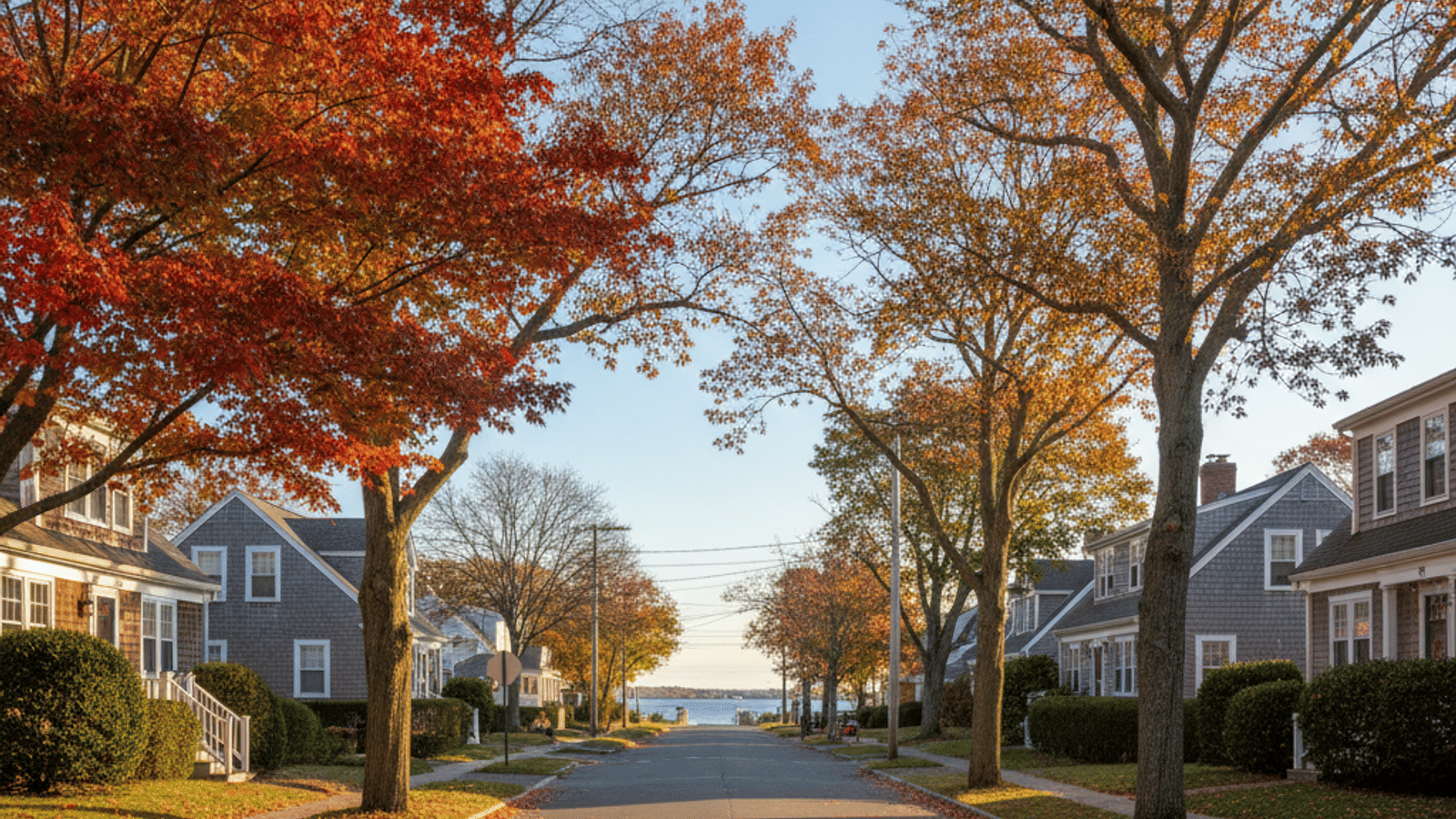
When people look at homes in Bourne MA, they often focus on the geography. It is the “gateway” to Cape Cod, the first stop over the bridge, and a convenient commute for anyone working in Boston or Providence. But for those of us keeping an eye on the numbers, Bourne represents a serious financial sweet spot. It isn’t just the physical entrance to the Cape; in many ways, it is a tax haven compared to its mainland neighbors.
While property values have risen across the region, Bourne has managed to keep its tax rate competitive. For Fiscal Year 2026, the headline tax rate sits at $7.65 per $1,000 of assessed value.
However, the “sticker price” isn’t the whole story. If you are thinking about living in Bourne MA, you need to understand how the total bill comes together. Unlike some towns where you get a single flat number, our town has a few unique layers—specifically regarding water districts—that can change your monthly budget depending on which neighborhood you choose.
Bourne Property Tax Rate: FY 2026 Breakdown
Let’s start with the base number. For Fiscal Year 2026 (which runs from July 1, 2025, through June 30, 2026), the residential tax rate for the Town of Bourne is $7.65.
This rate applies to all residential properties, whether you are buying a sprawling single-family home or a low-maintenance condo. It is worth noting that this rate actually decreased slightly from the previous year (FY 2025 was $7.81).
Before you celebrate the drop too hard, keep in mind that while the rate went down, assessed property values likely went up due to the strong real estate market. This is a common balancing act in municipal finance: as home values rise, the town can lower the rate while still collecting the necessary revenue to run schools, police, and public services.
The “Hidden” Variable: Water District Taxes
Here is where the math gets a little more local. In many towns, water is just a usage bill—you pay for the gallons you use, and that’s it. In Bourne, we have Water Districts that function as independent entities. These districts levy a separate tax rate on top of the town’s base rate.
Depending on where the property is located, you will fall into one of three main districts. This is a mandatory add-on to your property tax bill, not an optional fee.
Here is what the district add-ons look like for FY 2026:
- Bourne Water District: Adds approximately $0.07 per $1,000.
- Buzzards Bay Water District: Adds approximately $0.55 per $1,000.
- North Sagamore Water District: Adds approximately $0.79 per $1,000.
If you are looking at Buzzards Bay real estate, you should budget for that extra 55 cents. If you are eyeing Sagamore Beach homes, you are likely in the North Sagamore district, which has a slightly higher rate.
One common question we get from buyers moving from Wareham is about fire districts. You will be happy to know that fire protection here is municipal. There is no separate Fire District tax in Bourne.
How to Calculate Your Total Tax Bill
To figure out exactly what you will owe, you can’t just look at the sales price. You need to look at the Assessed Value (which is often lower than market value) and apply the correct district math.
The basic formula looks like this: (Assessed Value ÷ 1,000) × (Town Rate + District Rate) = Base Tax
You also need to factor in the Community Preservation Act (CPA) surcharge. Bourne adopted the CPA to fund open space and historic preservation. This is typically a 3% surcharge on your tax bill, but it is calculated after a $100,000 exemption on your property’s value.
Let’s run a quick example: Imagine you own a home in Buzzards Bay assessed at $700,000.
- Identify the Rates: Town rate ($7.65) + Buzzards Bay Water District ($0.55) = $8.20 combined rate.
- Divide Value: $700,000 ÷ 1,000 = 700.
- Calculate Base Tax: 700 × $8.20 = $5,740.
That $5,740 is your estimated base tax for the year. The CPA surcharge would be a small percentage added on top of that, but this formula gives you a very solid baseline for your monthly escrow calculations.
Exemptions & Abatements
If you are looking for ways to lower that bill, it is worth checking with the Assessor’s Office to see if you qualify for statutory exemptions. These are generally available for specific groups, including:
- Seniors: Clause 41C often provides relief for residents over a certain age with income/asset limitations.
- Veterans: Clause 22 offers exemptions for veterans with service-connected disabilities.
- Surviving Spouses: Clause 17D assists surviving spouses and certain older citizens.
However, there is one “exemption” Bourne does not have, and this is actually good news for second-home buyers. Bourne does not currently adopt the “Residential Exemption” (Section 5C).
Towns like Provincetown, Barnstable, or Boston use this exemption to shift the tax burden away from year-round residents and onto seasonal owners (who end up paying a higher effective rate). Because Bourne treats all homeowners equally regardless of residency status, it remains a very attractive market for vacation homeowners compared to other parts of the Cape.
Bourne vs. Neighbors: The Tax Comparison
When you compare Bourne to the surrounding towns, the “Gateway” advantage becomes clear. We aren’t just closer to the bridge; we are often lighter on the wallet.
- Bourne vs. Plymouth: Plymouth’s rate for FY26 is hovering around $12.55. On a $700k house, you are saving thousands a year by being on the Bourne side of the line. If you are browsing Plymouth MA homes for sale, keep that recurring cost in mind.
- Bourne vs. Wareham: Wareham has a lower base rate, but they have a heavy Fire District tax system. When you combine the town rate (~$8.55) with the fire district (~$2.00+), the total usually exceeds $10.50. Bourne is significantly cheaper because our fire protection is included in the town budget.
- Bourne vs. Sandwich: Sandwich is a beautiful town, but their rate is generally higher, sitting around $10.19 for FY26. Those looking at Sandwich MA real estate will typically pay more in taxes for a similarly priced home.
- Bourne vs. Falmouth: Falmouth historically has one of the lowest rates on the Cape (around ~$5.87). However, the entry price for real estate there is often much higher, so the actual check you write might be similar.
Important Dates & Payment Schedule
Nobody likes late fees, so it helps to know the rhythm of the tax year. Bourne operates on a fiscal year that runs from July 1 to June 30.
Taxes are billed quarterly. Here is the typical schedule you need to mark on the calendar:
- August 1: First Quarter Payment Due (Preliminary bill).
- November 1: Second Quarter Payment Due (Preliminary bill).
- February 1: Third Quarter Payment Due (Actual bill—this is where the new rate is reflected).
- May 1: Fourth Quarter Payment Due.
If you believe your property has been over-assessed, the deadline to file for an abatement is typically February 1 (the due date of the first “Actual” bill). Always verify this date with the town hall as the year begins.
FAQs
No. Unlike neighboring Wareham or Barnstable, fire protection in Bourne is funded through the municipal budget. You do not pay a separate tax rate for fire services.
For Fiscal Year 2026, the residential tax rate is $7.65 per $1,000 of assessed value. However, you must add the rate of your specific Water District (ranging from roughly $0.07 to $0.79) to get your total effective rate.
Bourne bills property taxes quarterly. Payments are due on August 1, November 1, February 1, and May 1.
No. Bourne does not currently offer the Section 5C Residential Exemption. This means year-round residents and seasonal second-home owners are taxed at the same rate, which is beneficial for those looking to buy a vacation property.