
If you are thinking about moving to Cape Cod but still need to maintain a tether to the “real world” (aka Boston or Providence), Bourne is usually the first place on your list. Literally.
As the first town you hit when crossing the bridge, Bourne is distinct from the rest of the Cape. It’s early 2026, and while the rest of the peninsula often slows down to a crawl in the off-season, Bourne maintains a steady, year-round pulse. It offers that salty, maritime village feel without the isolation that comes with living further out in Orleans or Truro.
The most unique thing about living here is the geography. Bourne is the only town that straddles the Cape Cod Canal. It creates a “tale of two towns” dynamic: the mainland side and the Cape side. Which side you choose will dictate your commute, your price point, and your daily lifestyle.
Bourne Neighborhood Guide: Mainland vs. Cape Side
When buyers look at Bourne MA neighborhoods, the first question isn’t usually “Colonial or Ranch?” It’s “Which side of the bridge?” The Canal splits the town right down the middle, and crossing it during peak summer traffic is a strategic decision you’ll make every day.
The Mainland Side (North of the Canal)
If you commute to Boston, this is often the sweet spot. You get the Cape Cod address and lifestyle, but you don’t actually have to drive over the bridges to get to work.
- Buzzards Bay: This is the downtown hub. It’s walkable, sits right on the water, and has seen massive revitalization over the last few years. If you want to walk to a coffee shop or catch the train/bus, this is the spot.
- Sagamore Beach: Located on the northern end, this area feels very residential and quiet. It has excellent access to Scusset Beach and is popular for those wanting a suburban feel with ocean access.
- Bournedale: Tucked away and scenic, offering a mix of wooded privacy and proximity to the water.
The Cape Side (South of the Canal)
Once you cross the bridge, you are officially “on Cape.” The pace slows down a bit, and the maritime history feels deeper.
- Pocasset: This is a classic harbor village. It feels established and community-focused, with winding roads and salt marshes.
- Cataumet: Known for its historic estates and deep ties to sailing. It’s arguably the most “upscale” village in Bourne, with a strong summer population but a devoted year-round community.
- Monument Beach: A fantastic village center with a local bakery, pizza spot, and a large marina. It feels like a small town within a town.
- Gray Gables: Famous for being the summer home of President Grover Cleveland, this neighborhood is highly sought after for its water views and tight-knit vibe.
Bourne Real Estate Market & Housing Costs (2026 Update)
As we settle into 2026, the real estate market in Bourne has found a rhythm that is competitive but not quite as frenzied as the post-pandemic boom. We are currently in a balanced-to-seller-favored market. Good inventory moves quickly, but buyers have a little more breathing room to do inspections and due diligence than they did a few years ago.
You’ll find a diverse mix of housing stock here. We have everything from historic sea captains’ colonials in Cataumet to mid-century ranches in Pocasset and new waterfront construction near the Canal.
In terms of pricing, the median sold price for a single-family home is currently hovering in the $600,000 to $700,000 range. You can certainly find smaller cottages for less or sprawling waterfront estates for significantly more, but that $600k–$700k window is where the bulk of the market moves.
A note for renters: The rental market here is incredibly tight. Because Bourne is a summer destination, many property owners prefer lucrative weekly summer rentals over year-round leases. If you are looking for a year-round rental, expect to pay a premium (often $2,000+ for modest spaces) and be ready to act immediately when a listing drops.
On the financial side, property taxes in Bourne are generally seen as reasonable, especially compared to some neighbors. The tax rate is hovering around $8.81 per $1,000 of assessed value, which often comes in lower than nearby Sandwich.
Cost of Living: Bourne vs. Greater Boston
One of the main drivers for people moving to Bourne MA is the value proposition. When you compare what you get here versus the Greater Boston suburbs, your dollar stretches significantly further.
You are generally paying less per square foot here than you would in the “Lower Cape” towns like Chatham or Orleans, and certainly less than the South Shore towns closer to the city.
However, keep an eye on utilities. Many homes in Bourne are older stock, and heating oil is a common fuel source here. If you are moving from a city apartment with included heat, the cost of filling an oil tank in February can be a surprise. Other day-to-day costs like groceries and services are standard for Massachusetts, though you might notice slight seasonal spikes in gas prices during peak tourist months.
Commuting and Transportation: The Bridge Factor
Let’s be real: If you are looking at commuting from Bourne to Boston, the bridges are the main topic of conversation.
For drivers, a typical commute to Boston takes about 60 to 75 minutes without traffic. If you live on the mainland side (Buzzards Bay or Sagamore Beach), you avoid the “bridge bottleneck” entirely in the mornings, which is a massive quality-of-life advantage.
If you prefer not to drive, Peter Pan Bus Lines runs reliable commuter service with stops right in Buzzards Bay and Bourne. It’s a popular option for professionals who want to work on their laptops during the ride.
The Bridge Replacement Project (2026 Status) As of early 2026, the project to replace the aging Sagamore and Bourne bridges is in the environmental review and final permitting phase. This is a massive infrastructure project. The current timeline suggests we could see construction start on the Sagamore Bridge around 2027, with the Bourne Bridge following later, likely in the 2030s.
For now, the bridges are safe and functional, but maintenance work can cause lane closures. This is why many daily commuters opt for the “Mainland Side” to keep their daily routine predictable.
Schools and Education in Bourne
For households with students, education is a top priority. Bourne offers a few distinct paths.
The Bourne Public Schools system serves the town with an elementary, middle, and high school structure. The district has invested significantly in facilities over the last decade.
A major draw for the region is the Upper Cape Cod Regional Technical School. Located right here in town, this vocational-technical school serves Bourne and several surrounding towns. It is highly competitive and well-regarded for its trade programs and academic rigor.
In terms of higher education, the town is home to the Massachusetts Maritime Academy. “Mass Maritime” is a major entity in town—not just as an employer, but as a landmark. You’ll see the training ship Kennedy docked at the end of the Canal, and the cadets are a familiar sight in the community.
For private education, there are several options in nearby Falmouth and Sandwich, including Falmouth Academy, which are within a reasonable driving distance.
Lifestyle: Beaches, The Canal, and Recreation
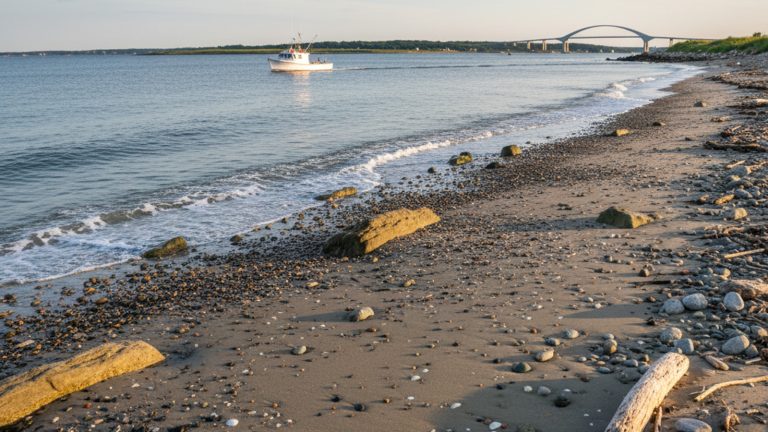
Life in Bourne revolves around the water, but in a different way than the outer Cape. We don’t have the massive, rolling surf of the National Seashore. Instead, we have the calm, warm waters of Buzzards Bay.
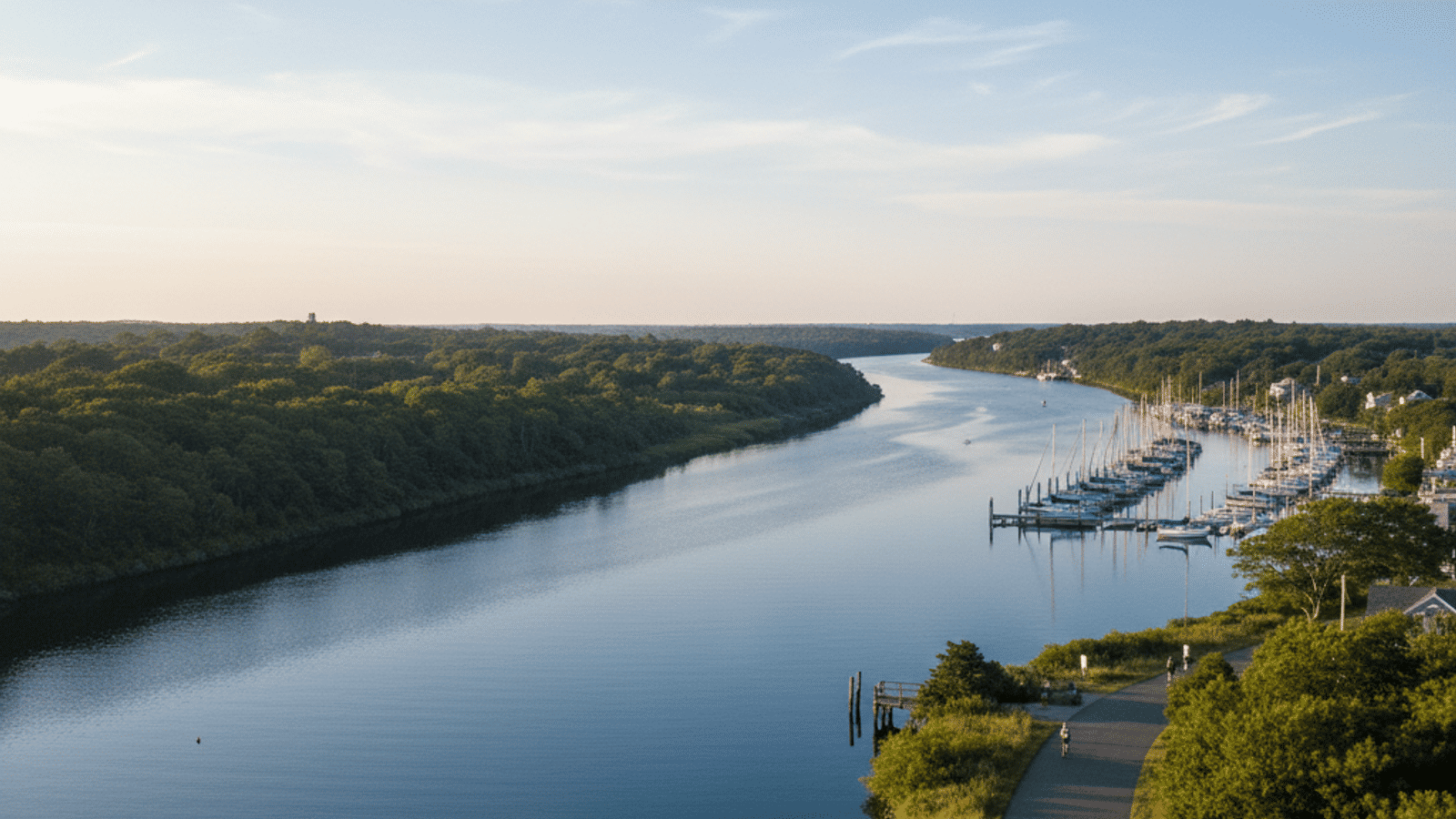
- The Canal Bikeway: This is essentially the town’s gym and social hub. It’s a paved path running 7+ miles on both sides of the Canal. On any given Saturday, you’ll see runners, cyclists, and fishermen lining the banks. It’s flat, scenic, and free.
- Beaches: Bourne’s beaches (like Monument Beach and Gray Gables) are on the bay side. The water is calmer and warmer, making it ideal for swimming and kayaking.
- Boating: This is huge here. With protected harbors in Pocasset, Cataumet, and Phinney’s Harbor, getting out on the boat is a standard weekend activity.
- Dining: The food scene has evolved. While we still love our classic lobster shacks and fried clams, the area has seen a growth in year-round restaurants, particularly near the Buzzards Bay village center and along the water in Pocasset.
Pros and Cons of Living in Bourne
If you are weighing the decision, here is a quick snapshot of the trade-offs.
Pros:
- Commutability: It offers the easiest access to the mainland of any Cape town. If you live on the north side, you have zero bridge anxiety.
- Value: You generally get more house for your money here than in the Boston suburbs or the pricey towns further down the Cape.
- Recreation: The Canal and Bay offer endless free outdoor activities.
Cons:
- Summer Traffic: Even if you learn the back roads, summer weekends are busy. Traffic is just a fact of life from June to August.
- Seasonality: While better than the Outer Cape, some businesses do still close up shop for January and February.
FAQs
Yes, absolutely. Bourne is the first town on Cape Cod. However, because it spans both sides of the Cape Cod Canal, some people get confused. If you are in Bourne, you are on the Cape (or at least, in the town that welcomes you to it).
In 2026, you should plan for about 60 to 75 minutes for a drive into Boston during off-peak times. However, rush hour and summer Friday traffic can significantly increase that time.
Currently, the project is in the environmental review and permitting stages. Construction on the Sagamore Bridge is projected to potentially start around 2027, while the Bourne Bridge replacement is scheduled for the 2030s.
Bourne has excellent beaches, but they are different from the ocean-side beaches. They are on Buzzards Bay, meaning the water is calmer, warmer, and generally lacks big waves. They are great for swimming and relaxing, but not for surfing.