

If you live in Bourne, you already know we occupy a unique spot on the map. We are the “Gateway” to Cape Cod, the only town that straddles the Canal. That geography gives us a dual advantage in the real estate market: we appeal to the Boston/Providence commuter who needs bridge convenience, and we capture the “True Cape” buyer looking for that vacation lifestyle in Pocasset or Cataumet.
As we settle into 2026, the market has shifted. We aren’t in the overheated frenzy of a few years ago, but we have landed in a stabilized seller’s market. Inventory is still the biggest hurdle for buyers right now. If your home is priced correctly—hovering near that median list price of roughly $695,000—it’s likely to move in under 20 days.
However, getting top dollar isn’t just about putting a sign in the yard. It’s about navigating the specific regulations and buyer expectations that define our town. Let’s look at the numbers and the strategies that are actually moving the needle in Bourne this year.
The #1 Deal-Killer: Title 5 & Nitrogen Compliance
Before you paint a single wall or plant a hydrangea, we need to talk about what’s happening underground. In Barnstable County, septic regulations are the single biggest factor in property value and transaction speed.
You have likely heard about the “Nitrogen Sensitive Areas” designation affecting the Cape. Here is the reality for 2026.
The Good News: As of July 2025, Barnstable County towns filed for Watershed Permits. This was a massive win for current homeowners because it effectively hit the “pause” button. It delayed the immediate requirement for existing homes to upgrade to expensive I/A (Innovative/Alternative) septic systems just to sell.
The Catch: While existing systems are safe for now, the rules are strict if you plan to change anything. Under the regulations effective January 1, 2026, any new construction or increase in flow—like adding a bedroom—in sensitive areas requires the installation of “Best Available Nitrogen Reducing Technology” (BANRT).
The Strategy: Do not wait for the buyer to ask for a Title 5 inspection. Get it done before you list. If your system fails during a transaction, you lose all your negotiation leverage. Buyers will demand a massive credit (often $30,000 to $50,000) to cover the uncertainty of a new install. Presenting a passing Title 5 certificate on day one tells buyers that your home is a safe investment, not a regulatory headache.
The New Value Frontier: ADUs & The Affordable Homes Act
If you have extra land or a convertible structure, the smartest equity play in 2026 might be an Accessory Dwelling Unit (ADU).
Thanks to the Affordable Homes Act passed in 2025, homeowners in single-family zones can now build an ADU up to 900 square feet (or 50% of the primary dwelling’s size) by right. This means you generally don’t need to fight through a discretionary special permit process.
Why this adds value:
- Multi-Generational Living: This is a huge selling point for buyers who need space for aging parents or adult children returning home.
- Income Potential: A legal rental unit can offset the mortgage, making your higher price point more attainable for buyers.
The Important Restriction: You need to know the difference between “rental income” and “vacation rental.” The state law was designed to create housing, not hotels. Generally, ADUs built under this specific by-right provision cannot be used as Short-Term Rentals (STRs) like Airbnb. They are intended for year-round tenants or family members.
This strategy works exceptionally well for homes in Sagamore or Buzzards Bay, where you can market the unit to local workers or commuters who need year-round housing.
High-ROI Upgrades: Coastal Function over Interior Fluff
When you look at the 2025 Cost vs. Value data for New England, the results are clear: the exterior is king. Buyers in Bourne are pragmatic. They know what the salt air does to a house, and they will pay a premium for durability.
Here is where to spend your renovation budget for the best return:
- The Garage Door: It sounds boring, but replacing an old garage door recoups about 268% of its cost. It is the first thing buyers see, and it signals that the home has been maintained.
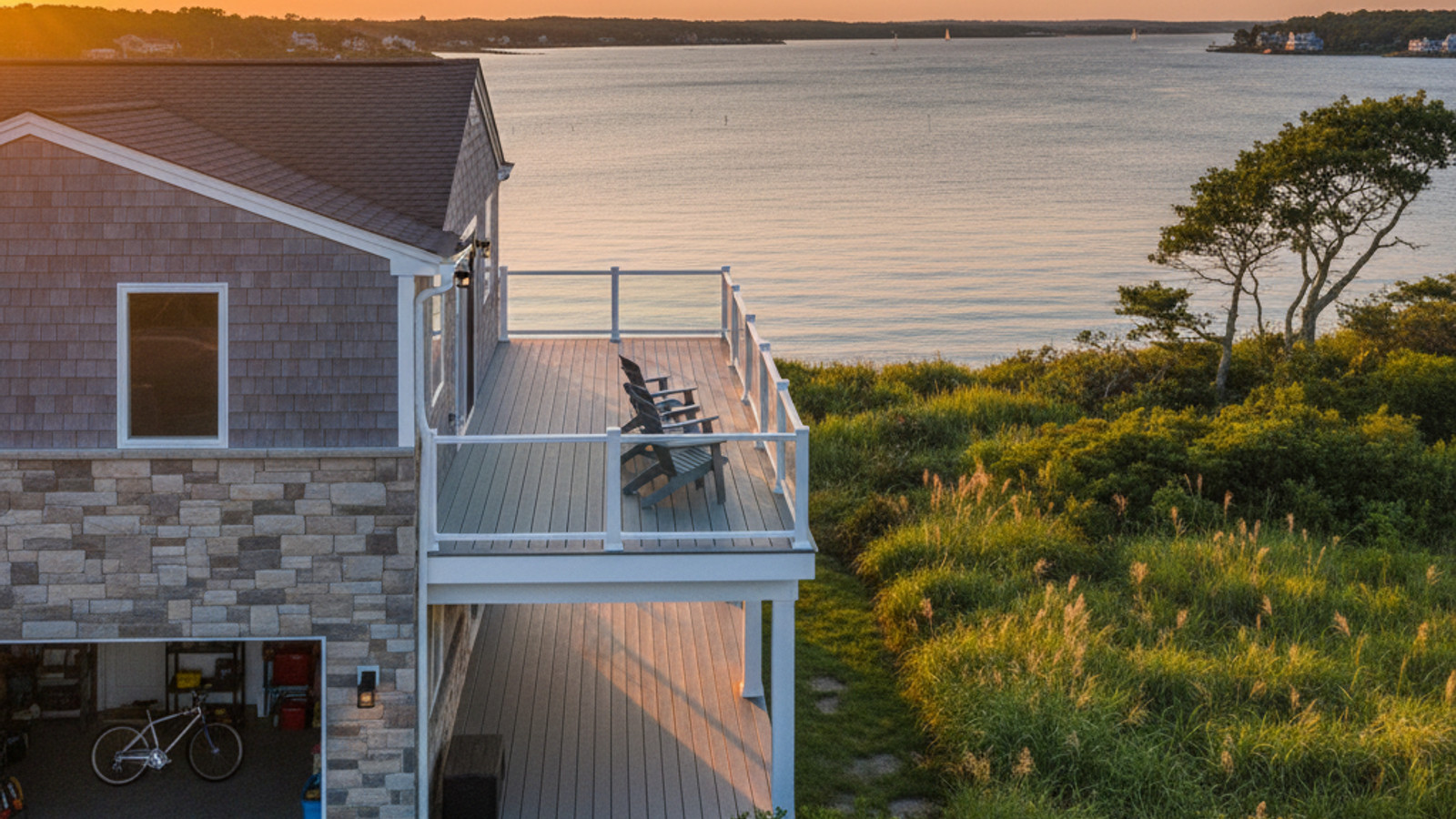
- Composite Decking: If you are near the Canal or the bay, skip the pressure-treated wood. Wood rots and warps quickly in our climate. installing composite decking tells a buyer, “You won’t have to sand and stain this every summer.”
- Energy Efficiency: With our regional electricity rates, efficiency is a financial necessity. New windows and upgraded insulation are critical selling points. If a buyer walks in and feels a draft, they are mentally deducting thousands off your asking price for heating bills.
- The “Cape” Aesthetic: Never underestimate the emotional pull of the coastal lifestyle. An outdoor shower or a crushed shell driveway are relatively low-cost additions that signal “vacation mode” to buyers, especially in villages south of the bridge.
Village-Specific Value Drivers
Bourne isn’t a monolith; a strategy that works in Buzzards Bay might flop in Cataumet. You have to tailor your approach to your village.
North of the Canal (Buzzards Bay, Sagamore) Here, value is driven by the commute. Buyers are looking for easy access to Route 3 and the bridges.
- Focus on: Soundproofing (triple-pane windows are a huge plus near the highway), ADU potential for income, and energy efficiency.
- Highlight: The revitalization of Main Street in Buzzards Bay and the proximity to the commuter rail or bus lines.
South of the Canal (Pocasset, Cataumet, Monument Beach) Once you cross the bridge, the psychology shifts to “vacation mode” or “retirement haven.”
- Focus on: Outdoor living spaces, water views, and dock access.
- Highlight: Proximity to beaches and harbors.
- The Flood Zone Factor: If you are in a low-lying area, elevating your utilities (HVAC and water heater) is a major functional value-add. It protects the mechanicals during storms and can help lower insurance premiums for the new owner.
Common Questions on Bourne Property Values
Is 2026 a good time to sell a house in Bourne, MA?
Yes. While the frenzy of the early 2020s has cooled, we are in a stabilized seller’s market. Inventory remains low across Barnstable County, meaning well-maintained homes priced correctly are still seeing competitive offers, often within weeks of listing.
Does adding an ADU increase property tax in Bourne?
Yes, adding an Accessory Dwelling Unit will likely increase your property’s assessed value, which in turn increases your tax bill. However, the increase in resale value and potential rental income usually outweighs the additional tax cost for most homeowners.
What is the most valuable home improvement for Cape Cod resale?
According to recent regional data, exterior improvements like stone veneer siding replacement and garage door replacements offer the highest Return on Investment (ROI). Durability against the coastal weather is often more valuable to buyers than luxury interior finishes.
How do I know if my Bourne home is in a Nitrogen Sensitive Area?
You should check the official maps provided by the MassDEP or the Barnstable County Department of Health and Environment. Being in these zones impacts your requirements for septic upgrades, especially if you plan to add bedrooms or build new structures.