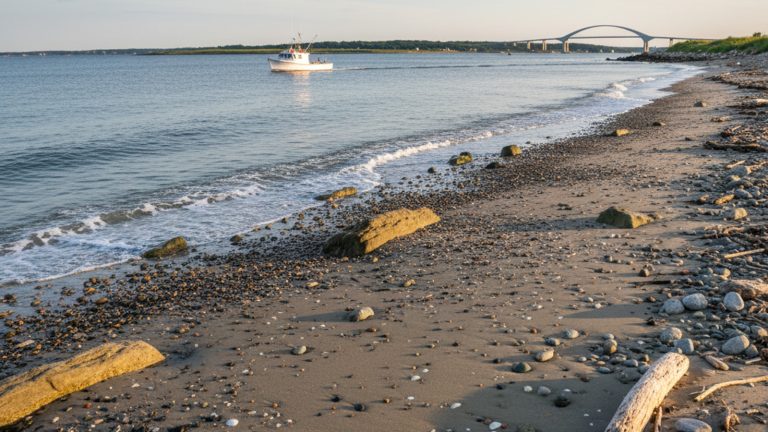

If you are looking at living in Bourne, the first thing you need to understand is that this town isn’t just near the water—it is defined by it. Bourne is the “Gateway to Cape Cod,” but uniquely, it is the only town that straddles the Cape Cod Canal.
That geography creates a very distinct split in daily life. You have the “Mainland” side (including Buzzards Bay and Bournedale) and the “Cape” side (including Monument Beach, Pocasset, and Cataumet). Where you choose to buy a home dictates whether you cross a bridge for milk or for your morning commute.
While the famous bridges are the main arteries, the transportation landscape here has shifted significantly over the last few years. As of 2026, we have more robust rail options and better transit connectivity than ever before. Whether you are commuting to Boston, heading to Providence, or just trying to get from Cataumet to Buzzards Bay, here is the realistic rundown on navigating Bourne.
Driving and the Bridges: Rules of the Road
Let’s be honest: if you live here, you drive here. While we have public transit, the car is still the primary way residents handle errands and local travel. However, driving in Bourne requires a specific set of skills—namely, mastering the bridges and the rotaries.
The Tale of Two Bridges
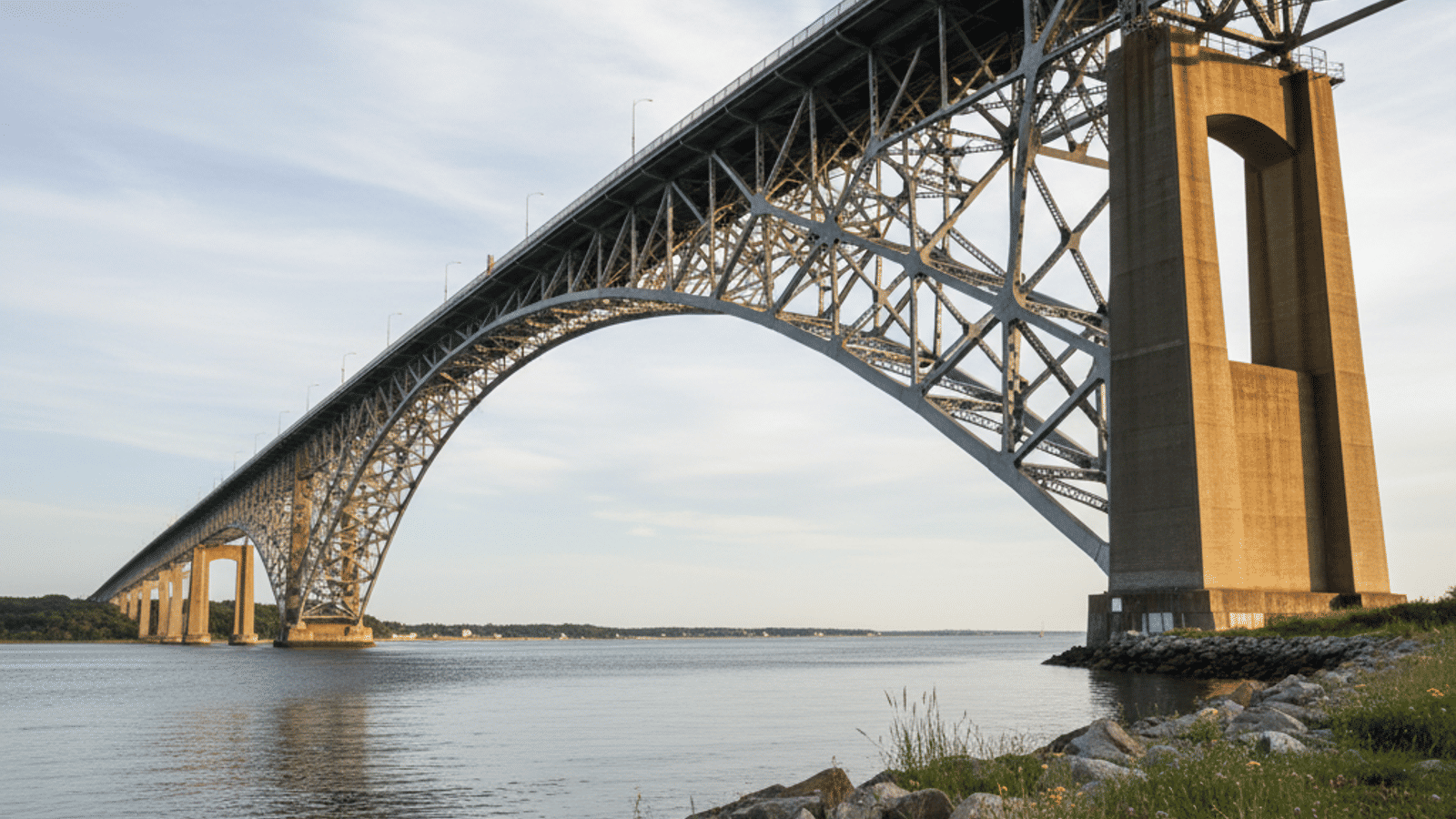
Newcomers often think the Bourne Bridge and the Sagamore Bridge are interchangeable, but locals know they serve very different purposes.
The Bourne Bridge connects to Route 28. It is generally your route if you are heading to the villages of Bourne on the Cape side, or further south to Falmouth and Woods Hole. If you live in Monument Beach or Pocasset, this is your bridge.
The Sagamore Bridge connects to Route 6 (the Mid-Cape Highway). This is the artery that feeds the rest of the Cape—Sandwich, Barnstable, and beyond. If you are trying to get from the mainland side to Hyannis, you are likely taking the Sagamore.
Navigating the Rotaries
If you are driving on the mainland side, you will become intimately familiar with the Belmont Circle and the Bourne Rotary. They are critical junctions that funnel traffic toward the bridges.
- Belmont Circle: This is where traffic from Buzzards Bay, Route 25, and local roads merge. It can be intimidating at first, but traffic generally flows steadily.
- Bourne Rotary: Located at the foot of the Bourne Bridge on the mainland side, this rotary distributes traffic between the bridge, the village of Buzzards Bay, and Trowbridge Road.
Traffic Patterns and Geography
The smartest thing a commuter can do is understand the “Mainland vs. Cape Side” dynamic. If you work in Boston or New Bedford but live on the Cape side (like Cataumet), you must cross the bridge twice a day. In the winter, this is usually fine. In the summer, Friday afternoons and Sunday mornings can see significant backups.
Many commuters specifically choose the mainland side (Buzzards Bay, Bournedale, Sagamore Beach) to avoid bridge traffic entirely during the workweek. It is also worth noting that bridge maintenance happens; savvy locals always keep the Mass511 app handy to check for lane closures before heading out.
Train Services: South Coast Rail & CapeFlyer
For decades, rail service in this area was limited or strictly seasonal. That changed significantly with the completion of the South Coast Rail project. As we settled into 2026, the options for getting to Boston without a car have become much more practical for year-round residents.
Year-Round Commuting (South Coast Rail)
Since the South Coast Rail brought active service to the region in 2025, the commute dynamic has shifted. While the train doesn’t stop directly in Bourne for year-round commuter service, the Middleborough and Freetown stations are just a short drive away.
For a resident living in Buzzards Bay or Sagamore Beach, driving roughly 15 minutes to the Middleborough station allows you to catch a direct train to South Station. This is a game-changer for professionals who want the coastal lifestyle of living in Bourne but need to be in the city a few days a week. It offers a reliable, consistent travel time that Route 3 traffic simply cannot guarantee.
Seasonal Service (The CapeFlyer)
From Memorial Day through Labor Day, we get the CapeFlyer. This is a dedicated weekend passenger train that runs from Boston’s South Station to Hyannis, and it makes a direct stop right here in Buzzards Bay on Main Street.
The CapeFlyer is fantastic, but it is not a commuter solution—it is a lifestyle perk. It runs Friday evenings, Saturdays, and Sundays. It is perfect for:
- Weekend trips into Boston for a game or dinner without worrying about parking.
- Heading further down-Cape to Hyannis for the day.
- Guests visiting you from the city who don’t have a car.
Bus Transit: Local and Regional Connections
If the train doesn’t fit your schedule, the bus network is the next best option. We have a mix of local circulation for errands and heavy-duty coaches for long-distance travel.
CCRTA (Local Transit)
The Cape Cod Regional Transit Authority (CCRTA) operates the Bourne Run. This line is vital for getting around town if you prefer not to drive. It connects the village of Buzzards Bay, Bourne Town Hall, and Sagamore, running all the way to Mashpee Commons.
It’s a reliable way to handle local shopping or get between villages. The CCRTA also offers “Dial-A-Ride” services (DART) which provide door-to-door service for eligible residents, which is a massive help for seniors or those with limited mobility.
Regional & Boston Buses
For daily commuting or airport runs, the Plymouth & Brockton (P&B) and Peter Pan bus lines are the heavy lifters.
- Sagamore Park & Ride: Located near the foot of the Sagamore Bridge, this is the major transit hub. Commuters park here to catch buses that run directly to South Station and Logan Airport.
- Buzzards Bay: There are also stops in Buzzards Bay that service these lines, making it easy to catch a ride to Boston or Providence.
These buses run frequent schedules year-round, making them a preferred option for people who want to read or work on their laptop during the commute rather than fighting highway traffic.
Walkability and the Canal Bikeway
When we talk about getting around, we can’t ignore the Cape Cod Canal Bikeway. This isn’t just a tourist attraction; it is a legitimate transit corridor for locals.
The Bikeway is a paved, flat path that runs roughly 7 miles along both sides of the canal (Mainland side and Cape side). Because it is separated from the road, it is safe and efficient. In the warmer months, you will see residents biking from the Bourne Bridge area down to the Sagamore Beach area to visit friends or grab lunch, completely bypassing the road traffic.
In terms of walkability, the village of Buzzards Bay is your best bet. The Main Street area has seen a revitalization, and you can easily walk from the train station to restaurants, the post office, and the waterfront park. Conversely, villages like Pocasset and Cataumet are much more spread out and rural; living there essentially requires a car for daily tasks.
Parking and EV Infrastructure
Because Bourne is a gateway town, parking infrastructure is generally better here than in the dense, historic towns further out on the Cape.
- Park & Ride: The Sagamore Park & Ride is the critical piece of infrastructure here. It’s large, paved, and well-lit. It fills up early on weekdays with commuters, but it is the most convenient place to leave a car if you are bussing into the city.
- Buzzards Bay Parking: If you are visiting Main Street or taking the CapeFlyer, there are public municipal lots near the train station and the park.
- EV Charging: As of 2026, charging infrastructure has improved. You will find chargers at major grocery stops like Market Basket and at the Park & Ride locations. Most newer condo developments and renovated homes are also increasingly adding NEMA 14-50 outlets in garages, as EV ownership is high among commuters here.
Estimated Commute Times
When you are planning your day, you need realistic numbers. Keep in mind that “summer traffic” is a real variable that can double these times on weekends, but for a standard Tuesday in October, here is what you can expect:
- To Boston: Driving usually takes 60–90 minutes, highly dependent on the Expressway (I-93). Taking the train from Middleborough stabilizes this to about 60 minutes on the rail plus your drive to the station.
- To Providence: Expect a drive of 45–60 minutes via I-195. This is often a smoother commute than heading north to Boston.
- To Hyannis: Once you are over the bridge, it’s about 20–30 minutes down Route 6.
- To Falmouth: From the Bourne Bridge, it is a straight shot down Route 28, taking about 15–20 minutes.
FAQs
Bourne does not have a year-round MBTA commuter rail station. The Buzzards Bay station is used specifically for the seasonal CapeFlyer (weekends, May–September). For daily year-round service to Boston, residents drive about 15 minutes to the Middleborough station to catch the South Coast Rail.
You have two main year-round options. You can take a P&B or Peter Pan bus from the Sagamore Park & Ride or Buzzards Bay, which goes directly to South Station and Logan Airport. Alternatively, you can take a short Uber or drive to the Middleborough train station and take the commuter rail in.
It depends entirely on your destination. If you are going to Falmouth, Mashpee, or the villages of Bourne (Pocasset, Cataumet), use the Bourne Bridge. If you are heading to Hyannis, Yarmouth, or further down-Cape, the Sagamore Bridge is the direct route to the Mid-Cape Highway (Route 6).
No, the CapeFlyer is a seasonal service. It operates on weekends (Friday through Sunday) from Memorial Day weekend through Labor Day. It is designed for summer visitors and weekend trips rather than daily commuting.
Yes, the CCRTA “Bourne Run” connects the villages, including Buzzards Bay, Monument Beach, and Pocasset. While it is not as frequent as big-city transit, it provides reliable connectivity for shopping, medical appointments, and reaching local hubs.