
There is a reason Bourne is often called the “Gateway to the Cape” – it offers that quintessential coastal lifestyle without the intense traffic headaches of driving all the way to Provincetown. You get the beaches, the boating, and the seafood, but you are still just an hour or so from Boston or Providence for work or travel.
However, building a new home here in 2026 is a different beast than building on the mainland. We are dealing with sandy soils, strict environmental protections, and a supply chain that has its own unique “Cape Cod” rhythm.
If you are looking to build my own home in Bourne MA, you need to go in with your eyes wide open regarding the timeline and the budget. Demand for custom homes is still incredibly high this year, and while interest rates have fluctuated, the appetite for new construction on the Upper Cape hasn’t really slowed down.
Step 1: Finding and Evaluating Land in Bourne
The first step is usually the hardest because “land for sale” in our listings doesn’t always equal “buildable land.” Inventory is tight, and many of the best spots in villages like Cataumet or Pocasset are already taken, leaving buyers to look at teardowns or tricky lots.
When you see land for sale Bourne MA, your first question shouldn’t just be about the price, but about the water table and wetlands. If a lot is within 100 feet of a wetland resource – which covers a huge portion of our town – you are instantly under the jurisdiction of the Bourne Conservation Commission. This doesn’t mean you can’t build, but it does mean you will have extra hoops to jump through before you break ground.
You also need to pull up the FEMA flood maps immediately. There is a massive difference in construction costs between Zone AE and Zone V. Zone V (Velocity) puts you right on the coast with high wind and wave exposure, often requiring expensive breakaway walls and pilings that can blow up your budget.
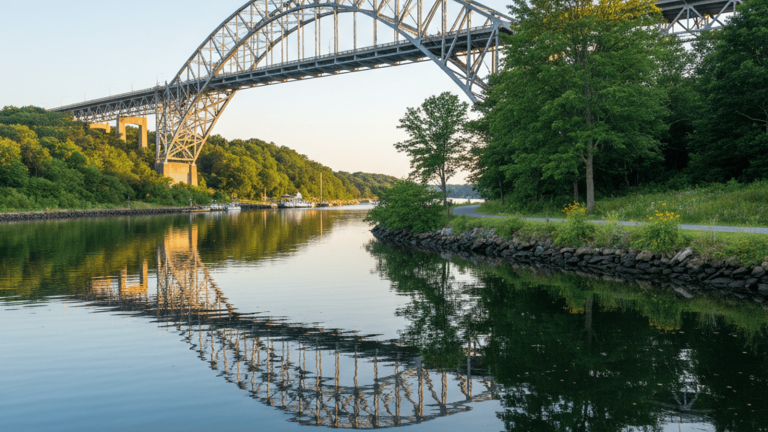
Finally, consider which side of the bridge you want to be on. Neighborhoods like Sagamore Beach allow you to stay on the mainland side, saving you from summer bridge traffic, while areas like Buzzards Bay or Monument Beach offer that deep Cape village feel but require crossing the Canal.
Navigating Zoning, Conservation, and Nitrogen Rules
Once you have a lot in mind, the regulatory landscape is where things get technical. Bourne takes its natural resources seriously, so you should expect a rigorous review process.
The Conservation Commission is very strict about the “50-foot no-disturb” buffer zone. If you are planning a sprawling deck or a pool near a marsh, you might run into limitations. The goal is to protect the coastline that makes living here so special, but it requires careful site planning from day one.
The biggest change affecting builders in 2025 and 2026 is the crackdown on nitrogen. Much of the Cape is now designated as Nitrogen Sensitive Areas (NSAs). Standard Title 5 septic systems often aren’t enough anymore because they don’t filter out enough nutrients to protect our bays and estuaries.
In many cases, you will be required to install an I/A (Innovative/Alternative) septic system. While a standard system might cost you around $20,000, these advanced nitrogen-reducing systems can easily run $35,000 to $50,000 or more. The good news is that Bourne uses an online permitting portal (OpenGov) which makes tracking these applications much more transparent than the old paper-filing days.
Cost to Build a House in Bourne, MA (2026 Estimates)
When people ask about the cost to build a house on Cape Cod, I always have to warn them about the “Cape Premium.” Labor and materials generally cost 15 – 30% more here than they do just over the bridge, simply due to logistics, travel time for trades, and high local demand.
When building a budget, don’t forget the soft costs. You aren’t just paying for wood and concrete; you need to allocate roughly 15 – 20% of your total budget for architects, civil engineering, surveying, and those varied permit fees.
For the hard costs – the actual construction – site preparation can be a wildcard. Clearing scrub pines, grading sandy hills, and trenching utilities on rocky or uneven terrain adds up fast.
Here is a realistic look at what you might pay per square foot in 2026:
- Mid-Range / Spec Standard: $250 – $400 per sq. ft.
- Custom Home: $300 – $600+ per sq. ft.
- Note: If you are looking at national averages of $150 per foot, throw those out – they do not apply to the Cape market.
Stick-Built vs. Modular Homes: Which is Right for You?
Given the cost and labor challenges, many buyers are weighing modular homes vs stick built Cape Cod options.
Stick-built remains the gold standard for custom design. If you want intricate rooflines, specific architectural details, and total control over every nook and cranny, this is the way to go. However, it is slower – often taking 12 to 18 months – and your frame is exposed to our wet coastal weather during the build.
Modular construction has become incredibly popular in Bourne for good reason. These homes are built in climate-controlled factories and assembled on-site, meaning your house can be weather-tight in just a few days.
The biggest pros for modular here are speed and wind resistance. Because they are transported on highways, they are over-engineered for strength, which is a bonus for our wind zones. You can often save about 10 – 20% compared to stick-built, and you avoid months of weather delays. Modern modulars look just like traditional Capes – they are definitely not “mobile homes.”
The Bourne Building Process: From Permit to Move-In
If you decide to move forward, it helps to know the roadmap. The process is a marathon, not a sprint.
It starts with site analysis and engineering. You will need perc tests to determine soil drainage for that septic system and a certified site survey to map out boundaries and topography.
Next comes design and permitting. You submit your plans to the Building Department and the Board of Health. This phase requires patience; allow yourself 3 to 6 months just to get the paperwork stamped and approved.
Once permits are in hand, site prep begins with clearing trees and pouring the foundation. From there, the house goes vertical with framing, followed by rough-in inspections for plumbing and electrical. Finally, you move to finishes and landscaping before receiving that all-important Certificate of Occupancy.
- Typical Timeline: Pre-construction takes 4 – 10 months, followed by 10 – 14 months of building. Expect the total project to take 1.5 to 2 years.
Utilities, Taxes, and Insurance
Living in Bourne comes with a few logistical quirks you should plan for financially.
Water is handled by the Bourne Water District, and you will likely pay connection fees starting around $1,000 depending on the location. For heating and cooking, natural gas lines aren’t everywhere. If your street doesn’t have gas, you will likely rely on propane tanks or, increasingly, high-efficiency electric heat pumps.
Property taxes in Bourne are generally reasonable compared to some neighboring towns, but because property values are high, the actual dollar amount you pay can still be significant.
Insurance is the big one to watch. Because we are a coastal community, premiums are higher. You will likely have a separate wind/hail deductible, and if you are in Zone AE or V, flood insurance is mandatory if you have a mortgage.
Assembling Your Local Team
You cannot successfully build here with a team that doesn’t know the territory. You need professionals who have existing relationships with the Bourne inspectors and the Conservation agent.
When hiring an architect, look for someone who understands “Cape Cod style” not just aesthetically, but structurally. They need to know how to design for high wind loads and salt air exposure.
Finally, accept the reality of “Cape Time.” Good builders are booked out far in advance. If you want to break ground next spring, you should be interviewing builders right now – 6 to 12 months early is standard.