

If you are looking for a home south of Boston, you’ve likely hit the classic dilemma: do you stop on the South Shore in Plymouth, or do you cross the bridge into Bourne? On a map, these two towns touch each other, but the lifestyle differences—and the financial implications—are much bigger than the few miles separating them.
Plymouth is “America’s Hometown,” a massive town (the largest in the state by land area) with a bustling downtown, heavy tourism, and distinct neighborhoods that feel like their own little worlds. Bourne is the “Gateway to Cape Cod“. It is quieter, defined almost entirely by the famous Cape Cod Canal that splits the town in half.
For many buyers, the decision comes down to the “Bridge Factor.” Do you want the convenience of the mainland and the commuter rail, or are you chasing the lower taxes and nautical pace of the Cape? Let’s break down the numbers and the vibes to see which town fits your life.
Lifestyle & Vibe: Tourist Hub vs. Nautical Village Life
When you are living in Plymouth, you are in the center of the action. The downtown area near the waterfront is vibrant, packed with restaurants, bars, and history. In the summer, the tourism volume is high, but it brings an energy that many residents love. Because the town is so geographically large, you have distinct pockets of lifestyle. You have the master-planned polish of The Pinehills, the rural feel of West Plymouth, and the beachy, laid-back atmosphere of Manomet. It often feels more like a small city than a town.
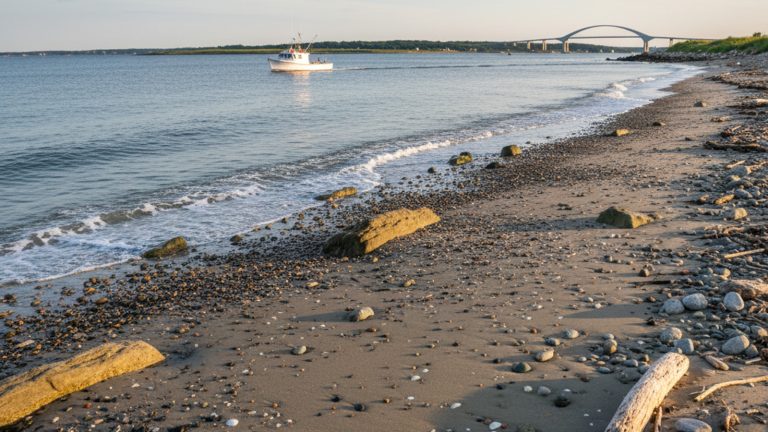
Bourne offers a completely different gear. It feels like a collection of small coastal villages—Pocasset, Cataumet, Monument Beach, and Buzzards Bay. The pace here is slower. Life revolves around the water, specifically the Canal and the myriad of bays and inlets suitable for boating. While Plymouth has a nightlife, Bourne is the kind of place where the evening entertainment is watching the sunset over the water or grabbing an ice cream cone near the bridge.
The community feel in Bourne is tighter and quieter. You won’t find the big-box sprawling energy here; instead, you get local seafood shacks and neighbors who know your boat’s name.
Cost of Living & Property Taxes
Let’s get into the financials, because this is often the deciding factor for retirees and budget-conscious buyers. There is a very distinct “Cape Cod tax advantage” that kicks in the moment you cross the town line into Bourne.
- Property Taxes Bourne generally has a significantly lower residential tax rate than Plymouth.
- Plymouth: The approximate residential rate sits around $12.69 per $1,000 of assessed value.
- Bourne: The approximate residential rate is much lower, around $7.81 per $1,000.
To put that in perspective, on a home assessed at $600K, a Bourne resident might pay roughly $3,000 less per year in property taxes than a Plymouth resident. Over ten years, that is a substantial savings that can offset other costs.
Home Prices & Day-to-Day Costs Median home prices are relatively comparable, often hovering in the $600K to $700K range, though Plymouth has a higher price ceiling due to luxury condos and oceanfront estates. However, there are smaller day-to-day differences to watch for.
For example, Plymouth utilizes a “Pay-As-You-Throw” trash program. Residents have to buy specific orange town bags for their garbage, which can be an annoyance for newcomers. Bourne uses a sticker system for the transfer station, which many locals find more straightforward. Additionally, resident beach stickers are generally cheaper in Bourne (around $25) compared to Plymouth (around $70), and Bourne residents have some limited reciprocity with Sandwich beaches.
Commuting to Boston: The Bridge Factor
If you are commuting to Boston, this section is your most important read. The commute can be the dealbreaker.
Plymouth offers a fairly direct shot up Route 3. Depending on where you live in town—remember, South Plymouth is 20 minutes from North Plymouth—you can get to the city without ever worrying about bridge traffic. A massive advantage for Plymouth is the MBTA Commuter Rail (Kingston/Plymouth line). Having a train option is a game-changer for daily commuters who want to work on their laptop rather than grip the steering wheel.
Bourne is trickier, and it depends entirely on which side of the bridge you buy on.
- Mainland Bourne (Buzzards Bay, Sagamore Beach): You are technically on the “Cape,” but you are on the mainland side of the Canal. You can jump on Route 3 or Route 25 without crossing a bridge. This is a sweet spot for commuters who want the Cape vibe without the bridge traffic headache.
- Cape Side Bourne (Pocasset, Cataumet, Monument Beach): You must cross the Bourne or Sagamore Bridge. In the summer, on Fridays and Sundays, this can add significant time to your drive.
It is also worth noting that while the CapeFlyer train stops in Buzzards Bay and Bourne, it is a seasonal, weekend-focused service intended for tourists, not a daily commuter solution like the Plymouth line.
Real Estate Market: Inventory & Home Styles
Because Plymouth is so large, the inventory is incredibly varied. You can find 1700s antique colonials downtown, mid-century ranches in West Plymouth, and ultra-modern condos at the waterfront.
A major draw for many moving to Plymouth is The Pinehills. This is a massive master-planned community that functions almost like a town within a town, offering golf, shopping, and HOA-maintained living. Bourne generally does not have an equivalent to this style of large-scale, amenity-rich planned development.
Bourne’s real estate market is tighter. The inventory turns over a bit slower, and the housing stock is predominantly traditional Cape-style single-family homes. We are seeing some revitalization in Buzzards Bay with newer condos and streetscapes, but for the most part, you are buying into established, older neighborhoods. If you are looking for homes in Bourne, patience is often key, whereas in Plymouth, there is almost always something new hitting the market.
Schools, Parks, and Community Amenities
When comparing the two towns, you are looking at a difference in scale.
Schools Plymouth has a large school district. The high school offers a wide array of AP courses and extracurriculars simply because they have the student population to support them. It’s often rated around a B+ range. Bourne is a much smaller, more intimate district. Class sizes can feel smaller and the environment is tight-knit, typically rated around the B- range.
Beaches & Recreation Plymouth is famous for Plymouth Long Beach, where you can get a permit to drive your 4×4 vehicle right out onto the sand—a huge perk for beach lovers. White Horse Beach is another popular spot.
Bourne’s beaches, like Monument Beach and Gray Gables, are generally calmer, facing Buzzards Bay. They are excellent for swimming and kayaking but lack the heavy surf of the open ocean. A major amenity for Bourne residents is the Cape Cod Canal bike path. It runs along the water and provides miles of flat, scenic pavement for walking, running, or cycling without worrying about cars.
Shopping & Dining Plymouth wins on variety. Between the downtown waterfront and the massive Colony Place retail complex, you have access to big-box stores, fine dining, and chains. Bourne is much more limited. You’ll find great local diners and seafood spots, but for major shopping trips, Bourne residents often drive into Plymouth, Wareham, or down to Falmouth.
Summary: Pros and Cons by Buyer Type
If you are still on the fence, here is how the choice usually shakes out for different types of buyers:
- For Commuters: Plymouth usually wins for the train access and Route 3 convenience. However, Mainland Bourne is a strong runner-up if you drive.
- For Retirees: Bourne is often the winner due to the significantly lower property tax rate and the quieter, village lifestyle. However, those seeking a resort-style retirement often choose The Pinehills in Plymouth.
- For Beach Lovers: If you want waves and 4×4 access, go to Plymouth. If you want calm bay waters, boating, and kayaking, Bourne is the better fit.
- For Investors: Plymouth offers strong year-round rental demand due to its size and employment centers. Bourne is excellent for seasonal vacation rentals, especially near the water.
FAQ: Common Questions About Bourne vs. Plymouth
Generally, Bourne is cheaper regarding fixed annual costs because of the significantly lower property tax rate ($7.81 vs. $12.69 per $1,000). While home prices are comparable, the tax savings and cheaper beach stickers make Bourne more budget-friendly for many homeowners.
No, the MBTA Commuter Rail (daily service to Boston) ends in Plymouth/Kingston. Bourne is served by the CapeFlyer, but that is a seasonal, weekend-only train designed for visitors, not for daily commuting.
Not necessarily. Bourne is unique because it straddles the Cape Cod Canal. Neighborhoods like Buzzards Bay and Sagamore Beach are on the “Mainland” side, meaning you do not have to cross a bridge to head toward Boston, which saves residents from the worst of the summer traffic.
Bourne has the lower property tax rate. Bourne’s rate is approximately $7.81 per $1,000, while Plymouth’s is roughly $12.69 per $1,000.
Yes, the entire town of Bourne is legally and geographically part of Cape Cod. Even the villages on the mainland side of the Canal (like Buzzards Bay) are considered part of the Cape, giving residents the “Cape Cod” address and lifestyle.