
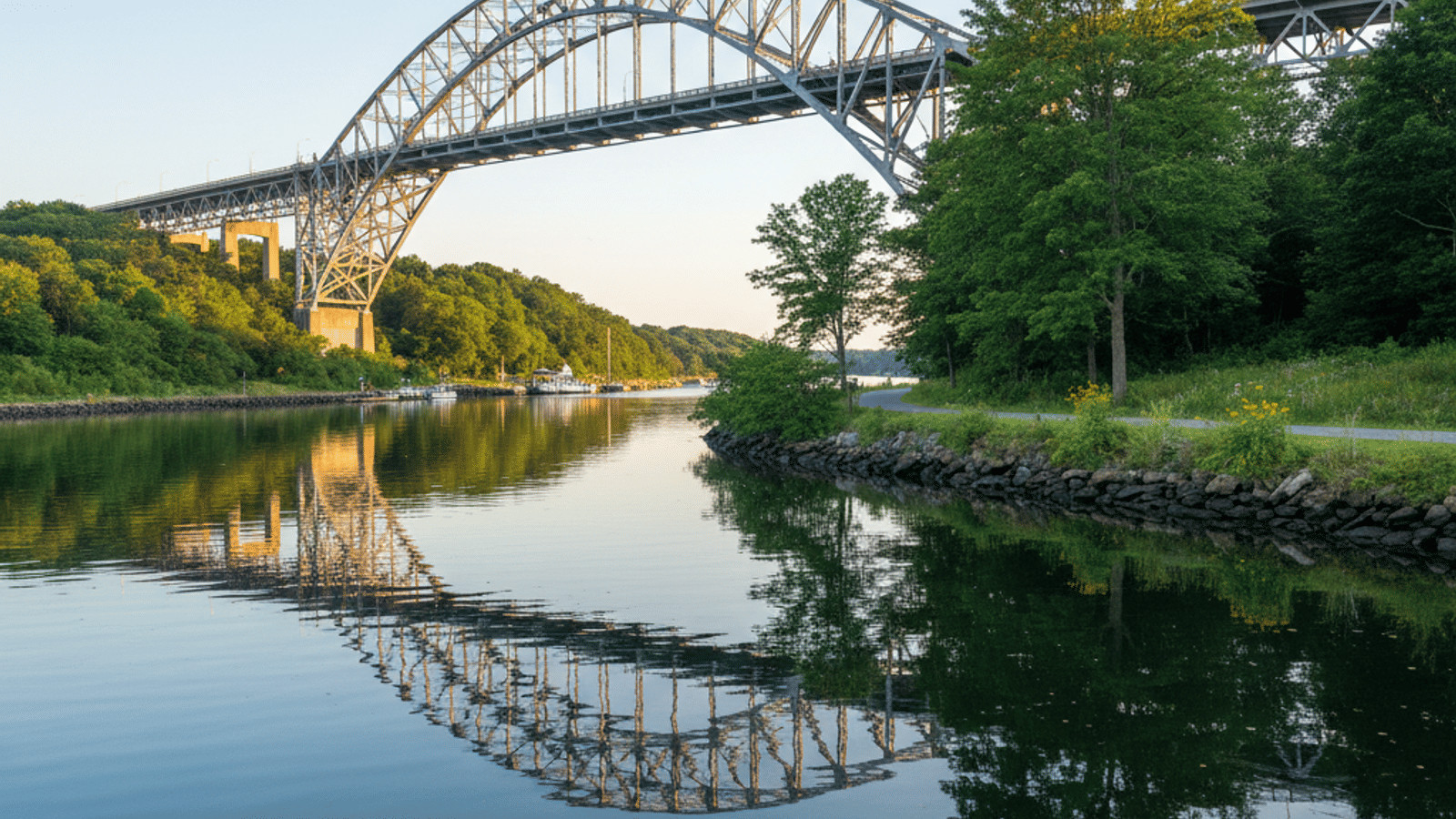
If you’ve ever driven onto Cape Cod, you’ve already been to Bourne. It’s the first town you hit after crossing either the Bourne or Sagamore Bridge, earning it the nickname “The Gateway to Cape Cod.” But for many people passing through on their way to Hyannis or Provincetown, Bourne is just the place with the rotaries and the bridges.
The truth is, this town has a fascinating backstory that makes it distinct from its neighbors. While it’s technically the “first” town geographically, it was actually the last town in Barnstable County to be incorporated, not officially separating from Sandwich until 1884. Yet, its settlement history goes all the way back to the Pilgrims and the Indigenous people who were here thousands of years before that.
Let’s grab a coffee and take a look back at how this unique community evolved—from a Native American trade route to a quiet farming village, and finally into the bustling seaside town we know today.
Indigenous Roots: The Wampanoag People
Long before European settlers arrived, the land that is now Bourne was home to the Wampanoag people, specifically the Herring Pond Tribe. For thousands of years, this region was a vital hub for life and trade. Because of its location between Buzzards Bay and Cape Cod Bay, the area was rich in natural resources.
The rivers here, particularly the Manomet River (which eventually became part of the Canal route), made this area incredible for fishing and hunting. It wasn’t just a place to live; it was a strategic crossroads. The Wampanoag used the river systems to travel and trade across the region, establishing trails and portages that would essentially serve as the blueprint for the Cape Cod Canal centuries later. Today, the Herring Pond Wampanoag Tribe continues to maintain a strong presence and connection to these ancestral lands.
1627: The Aptucxet Trading Post and Early Trade
One of the most significant claims to fame for Bourne is that it is often cited as the cradle of American commerce. In 1627, settlers from Plymouth Colony recognized the strategic value of the Manomet River and established the Aptucxet Trading Post.
Located on the riverbanks, this post was designed to facilitate trade between the Pilgrims, the Wampanoag people, and the Dutch from New Amsterdam (what we now call New York). Historians consider this site the location of the very first business contract in English North America. It wasn’t just a handshake deal; it was a sophisticated operation exchanging furs, sassafras, and lumber for European goods like sugar and cloth.
If you are interested in things to do in Bourne, visiting the replica of the Aptucxet Trading Post is a must. It gives you a tangible sense of just how important this little stretch of land was to the early economy of the New World.
From “West Sandwich” to Independence (1640–1884)
For the next two centuries, the area wasn’t known as Bourne at all. It was settled around 1640 and functioned as a village called Monument within the town of “West Sandwich.” For generations, this was a quiet agricultural and fishing community. Families farmed the land, fished the bays, and lived a relatively separate life from the main town center of Sandwich.
By the late 1800s, the residents of West Sandwich started feeling disconnected from the town government. They were geographically separated and felt their tax dollars weren’t coming back to their villages in the form of services. The push for independence grew stronger, finally culminating in a split.
On April 2, 1884, the town was officially incorporated. It was named after Jonathan Bourne Sr., a wealthy and influential whaling merchant originally from the area who had become a successful legislator in New Bedford. He helped push the act of incorporation through the state legislature, and in return, the new town bore his name.
The Industrial Era: Iron and Rail Cars
When we think of Cape Cod history, we usually picture whaling ships and cranberry bogs. However, Bourne had a surprisingly gritty industrial era in the 19th century that many people don’t know about. Before tourism became the main economic driver, this town was building things.
The most famous example was the Keith Car and Manufacturing Company in Sagamore. This was a massive operation that built freight cars for the expanding railroad networks. It employed hundreds of people and was a major reason why the village of Sagamore developed the way it did.
Simultaneously, you had the Bournedale Iron Works and other operations in Pocasset utilizing local bog iron to produce goods. The arrival of the railroad in 1848 connected these villages directly to Boston, fueling a mini-industrial boom that looked very different from the seaside leisure economy we see today.
Grover Cleveland and the “Summer White House”
The shift from industry to a resort destination really kicked into high gear in the 1890s, thanks to one very famous resident. President Grover Cleveland chose the Gray Gables neighborhood for his summer home, which the press dubbed the “Summer White House.”
Cleveland’s presence changed everything for Bourne. Suddenly, the town was on the map as a retreat for the wealthy and elite. The railroad even built a specific station at Gray Gables just for the President’s commute. Dignitaries and politicians flocked to the area, fishing in the bay and enjoying the cool sea breezes. This era signaled the end of the heavy industrial focus and the beginning of Bourne’s identity as a premier summer destination.
The Cape Cod Canal: Dividing the Land, Uniting the Economy
You can’t talk about the history of Bourne without talking about the Cape Cod Canal. It is the defining feature of the town. The idea of a canal had existed since colonial times—miles of dangerous shoals around the outer Cape made a shortcut incredibly appealing—but it wasn’t until the 20th century that it became a reality.
August Belmont Jr. and his company opened the original private canal in 1914. However, it was narrow and difficult to navigate. The federal government eventually took it over in the 1920s, widening and deepening it to accommodate larger vessels.
The construction of the current Bourne, Sagamore, and Railroad bridges between 1933 and 1935 created the iconic skyline we recognize today. But this engineering marvel came with a major local impact: it physically split the town in two. To this day, when you are living in Bourne MA, you are either on the “Mainland side” or the “Cape side.” This division influenced how neighborhoods developed and how residents move around their own town.
A Tale of Villages: Distinct Communities
Because of its geography and the way it separated from Sandwich, Bourne isn’t just one big town centered around a main street. It’s really a collection of distinct villages, each with its own vibe and history.
- Buzzards Bay: This developed as the commercial and railroad hub. It’s where the train station was and where much of the downtown activity happens today.
- Sagamore: Historically, this was the industrial heart thanks to the Keith Car Works. Today, it’s best known for the bridge, but the village roots run deep.
- Pocasset & Cataumet: These villages remained more rural and maritime-focused. They became hubs for summer colonies and have a rich history of boat building and coastal trade.
- Bournedale: Once home to iron works, it is now most famous for the Herring Run, a natural event that connects back to the indigenous history of the area.
If you are looking at Bourne neighborhoods, you’ll find that the architecture and layout of these villages still reflect these early origins.
Modern Bourne: Military and Maritime Influence
As the 20th century progressed, Bourne continued to evolve. In 1948, the Massachusetts Maritime Academy moved its campus to Buzzards Bay, cementing the town’s connection to the sea. The Academy brings a youthful energy and a sense of maritime tradition that is visible everywhere in town.
The growth of the nearby Otis Air National Guard Base (now Joint Base Cape Cod) in the mid-century also brought a wave of new residents and economic shifts. Military families moved in, and the town began to transition from a purely seasonal summer resort to the year-round residential community it is today (as of early 2026).
Historic Landmarks You Can Visit Today
For those interested in seeing this history up close, Bourne has done a great job preserving its heritage. Here are a few spots where you can step back in time:
- Aptucxet Trading Post Museum: As mentioned, this replica of the 1627 post is a cornerstone of local history.
- Jonathan Bourne Historical Center: Located in a beautiful 1897 building that used to be the library, this is the place to go for deep dives into town archives.
- Briggs-McDermott House: A preserved historic home that gives you a glimpse into daily life in the 19th century.
- Bournedale Herring Run: A site that blends natural history with the town’s industrial and indigenous past.