

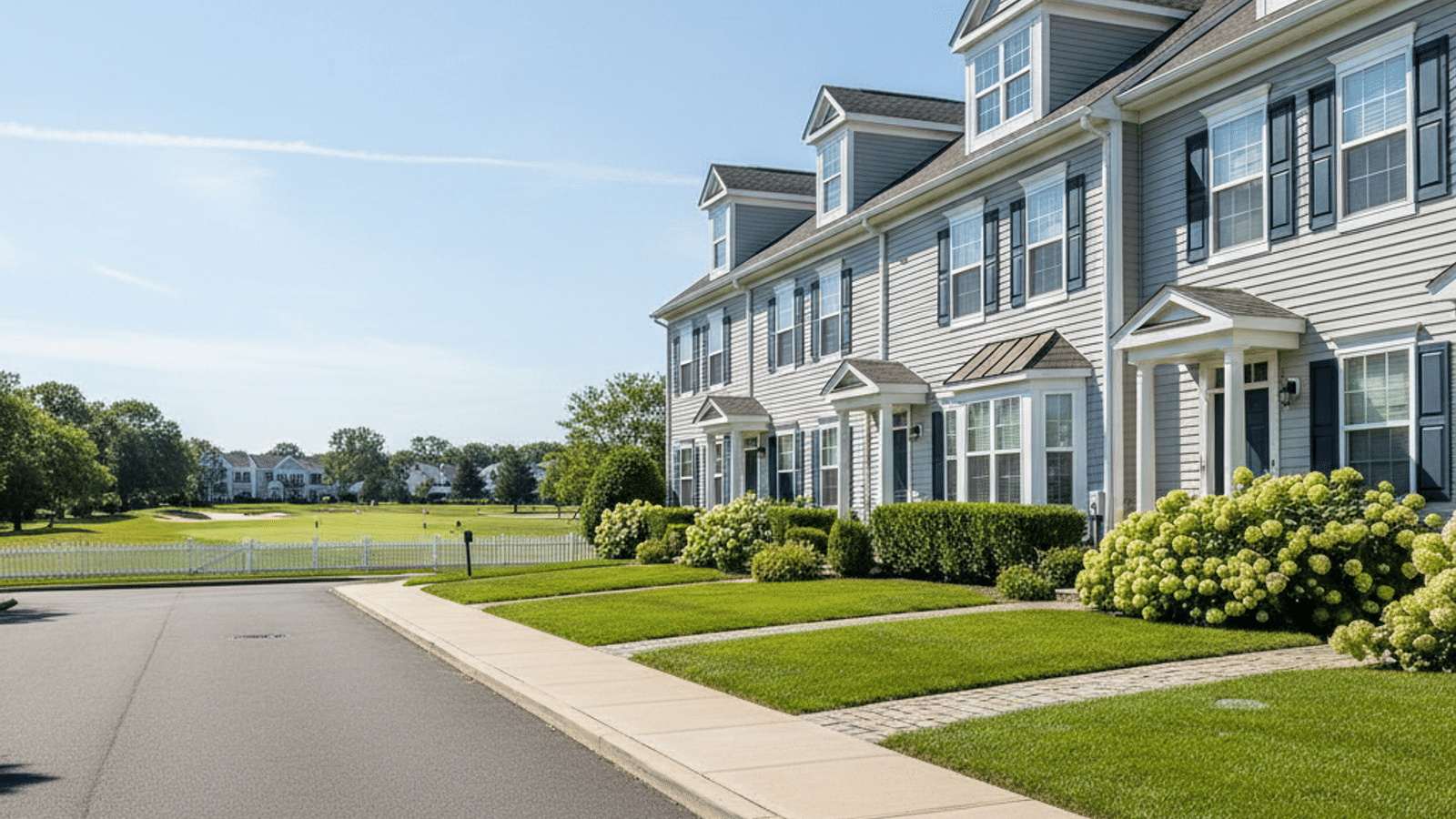
If you are looking at homes in Bourne, you know it’s the perfect gateway to Cape Cod. Whether you are eyeing a retirement spot near the bridge or a vacation getaway near the canal, the sticker price of the home is only part of the equation. One of the biggest variables in your monthly budget here will be the association fees.
In Massachusetts, you will hear terms like “condo fee” and “HOA fee” used almost interchangeably, though they technically refer to different legal structures. For a buyer’s purpose, they both mean the same thing: a recurring monthly cost on top of your mortgage and taxes. In Bourne, these fees vary wildly. You might see a simple condo fee around $300 that just covers snow removal and master insurance, or you could be looking at luxury golf communities where monthly dues climb well over $1,300.
It is important to know exactly what you are paying for before you sign on the dotted line. A high fee isn’t always “expensive” if it replaces bills you would pay anyway, like landscaping, gym memberships, or septic maintenance. Let’s break down what to expect for housing costs in Bourne when it comes to associations.
Typical HOA and Condo Fee Ranges in Bourne (2026)
When you are scrolling through listings, it can be confusing to see such a massive spread in monthly costs. The fee usually correlates directly with the lifestyle the community offers and the age of the buildings.
For standard condominiums and townhomes, you should budget somewhere in the $300 to $600 per month range. These are your typical “maintenance-free” living situations where the fee handles the exterior of the building, the lawn, and the plow guy. It is a predictable cost that keeps the neighborhood looking tidy without offering resort-style perks.
On the other end of the spectrum, you have luxury and golf communities. If you are looking at high-end spots, be prepared for fees that exceed $1,000 to $1,300 a month. While that sounds steep, it often includes security, extensive clubhouses, and pristine grounds maintenance that would cost a fortune to manage personally.
Don’t forget single-family neighborhoods. Most non-gated streets in Bourne don’t have a mandatory HOA fee. However, you might find voluntary associations or private road fees—often called Road Associations—that pop up annually rather than monthly. We will touch on those “hidden” road fees in a moment.
What Do Your Fees Actually Cover?
It is easy to resent writing that check every month if you don’t know where the money goes. For most Bourne condos, the bulk of your fee goes toward the “unsexy” stuff: master insurance policies, fixing the roof or siding, mowing the grass, and hauling away trash.
However, since we are on the Cape, there is a major specific factor you need to watch for: Title V septic systems. Many communities in Bourne are on private septic rather than town sewer. You need to verify if the association manages a large community septic system or if you are responsible for your own individual tank. If the HOA manages it, that fee includes the peace of mind that you won’t be hit with a $30,000 replacement bill personally, but it will drive the monthly cost up.
Utilities are another mixed bag. Water and sewer charges are sometimes bundled into the fee, but heating and electricity are almost always your responsibility unless you are buying into an older mill conversion or a very specific building type.
Finally, a chunk of your money goes into the Reserve Fund. This is the community’s savings account for big future projects like repaving the parking lot or replacing decks. A healthy reserve fund is your best protection against sudden cost spikes later.
Fee Examples by Community
To make this concrete, let’s look at how this plays out in some real local neighborhoods.
The Villages at Brookside is one of the most well-known communities in town. Because it is a golf-centric, high-end environment, the fees here reflect that premium lifestyle. Historically, you can expect fees to range from approximately $1,079 to over $1,300 per month. That money keeps the landscaping impeccable and maintains the secure, resort-like atmosphere that draws people to Villages at Brookside.
In contrast, if you are looking at the Sagamore Beach area, you will likely encounter a different model. Many of these neighborhoods have voluntary “Community Clubs,” such as the Sagamore Community Club. These aren’t mandatory HOAs. Instead, you might pay an optional annual fee—roughly $400 to $700 a year—to access tennis courts or specific beach parking. If you don’t use the amenities, you don’t pay.
For buyers looking at condos near Buzzards Bay or the canal, you will often find mid-range fees in the $400s. These usually cover the basics: snow removal, trash, and building maintenance, making them a practical choice for year-rounders who just want to avoid shoveling snow.
It is also worth comparing this to nearby Redbrook in Plymouth. Redbrook often attracts a similar buyer pool but operates differently. Their HOA fees might look low on paper (around $180), but they have separate utility and community fees for water and wastewater services. It is a good reminder that a lower HOA fee doesn’t always mean a lower total monthly payment.
The “Hidden” HOA: Private Road Associations
One quirk of Bourne real estate that catches off-Cape buyers by surprise is the number of “private” or “unaccepted ways.” These are streets that the town does not plow or pave.
If you buy a single-family home on one of these streets, you aren’t in a condo, but you might still have a mandatory fee. Residents on these streets often form Road Associations. These are informal or formal groups that collect dues specifically to pay a private snowplow driver in the winter and fill potholes in the spring.
These fees are typically collected annually rather than monthly and might run anywhere from $200 to $500 a year. It is critical to ask if a road maintenance agreement exists before you buy. If there isn’t one, you might find yourself in a dispute with neighbors over who pays to clear the road after a blizzard.
Massachusetts Regulations You Need to Know
Massachusetts has strong laws protecting condo owners, primarily under the MA Condo Act (Chapter 183A). This legislation governs how associations can set fees and collect money.
The most important document you will encounter is the 6(d) Certificate. You literally cannot close on a condo in Massachusetts without one. This is a notarized document from the HOA trustees stating that the unit is free and clear of unpaid fees. It ensures you don’t inherit the previous owner’s debt.
You also need to be aware of Special Assessments. If an association hasn’t saved enough money in their Reserve Fund for a new roof, they can vote to levy a “Special Assessment.” This is an extra charge—sometimes thousands of dollars—billed to every unit owner on top of the monthly fee. This is why checking the financials is just as important as the home inspection.
Tips for Evaluating HOA Health in Bourne
When you find a place you love, do a little detective work on the association before you commit.
First, ask for the last two years of budgets and meeting minutes. Minutes are where the drama hides. If you see repeated discussions about leaky roofs or arguments about raising fees, that is a red flag.
Second, look closely at the Reserve Fund. Does the amount of money in the bank make sense for the age of the community? A brand new building might not need much, but a complex built in the 1980s should have a healthy cushion for repairs.
Third, ask specifically about Title V compliance. When was the septic system last inspected? If it is a community system, are there plans to upgrade it? Septic repairs are expensive, and you want to know if that cost is looming.Finally, read the rules and regulations. If you plan to rent out your unit as a vacation property, check for rental caps or minimum lease terms. Many associations in Bourne have tightened rules to prevent short-term rentals, and you don’t want to find that out after you buy.
FAQs
No, your HOA fee is a separate payment made directly to the association or their management company. However, lenders do factor this monthly cost into your debt-to-income ratio when determining how much of a mortgage you can afford.
No, property taxes are a separate bill paid to the Town of Bourne. While some co-op structures (common in NYC) include taxes in their maintenance fees, that is extremely rare here; in a standard MA condo, you pay your own taxes.
Yes, and they usually do. The board of trustees reviews the budget annually and can vote to increase fees to cover rising costs for insurance, labor, and utilities without needing a full vote from all unit owners.
A 6(d) Certificate is a legal document required at closing in Massachusetts that proves all condo fees and assessments for a specific unit have been paid in full. It guarantees you are getting a “clean title” regarding association debts.