

When people say they are “moving to Cape Cod,” they usually picture a singular experience of dunes, shingled cottages, and lobster rolls. But if you’ve been looking at listings for a while, you know the reality is much more nuanced. The lifestyle in Provincetown is wildly different from Barnstable, and both are different from Bourne.
Bourne is unique because it is the “Gateway” to the Cape. In fact, it is the only town that straddles the Cape Cod Canal, meaning it has neighborhoods on both the “mainland” side and the “Cape” side. For homebuyers, this presents a specific dilemma: Do you want the deep, remote escapism of the Outer Cape, or do you want the practical, year-round convenience of the Upper Cape?
The “bridge factor” is usually the deciding vote here. Living in Bourne offers a balance that is hard to find further east—you get the coastal scenery and the boating lifestyle, but you keep one foot firmly planted near the mainland for easier travel.
Location & Accessibility: The Bridge Factor
Let’s be honest about the bridges. If you live in Hyannis or Orleans and work in Boston or Providence, your commute starts with a battle just to reach the bridge. In Bourne, you are at the bridge. This location advantage drastically minimizes the notorious Cape Cod traffic struggles that plague summer weekends.
Because Bourne covers land near both the Bourne and Sagamore Bridges, residents have strategic options. If one bridge is backed up, you often have a faster back-road route to the other. Furthermore, for residents in the villages of Buzzards Bay or Bournedale (on the mainland side), you don’t even have to cross a bridge to get groceries or head north toward Boston.
This proximity opens up access to non-Cape hubs that feels impossible from the Lower Cape. You are minutes away from the shopping and medical services in Wareham and Plymouth. Commuting to Boston is generally a 60 to 75-minute drive, whereas coming from the mid-Cape can easily push that to 90 minutes or more on a good day. Plus, with the CapeFLYER train stop right in Bourne, you have a viable rail alternative for getting into the city during the season.
Real Estate Market: Value and Inventory
When comparing Bourne to the rest of the Cape, the real estate market here is often defined by “attainable value.” While prices have risen across the region, Bourne often offers better value per square foot than “prestige” towns further east like Chatham or Osterville. You can generally get more house and more land here for your money.
The housing stock is a diverse mix. You will find historic colonials in Bourne Village, sturdy year-round ranches ideal for retirees or starters, and stunning waterfront cottages in neighborhoods like Gray Gables and Pocasset. Because of the commute advantage, the market here is highly competitive. Inventory moves fast because it appeals to year-round residents, similar to the demand seen in Falmouth.
In terms of pricing, median list prices often range from the mid-$600Ks to the high $800Ks, depending heavily on the village and proximity to the water. While that isn’t “cheap,” it is a significant entry point compared to the $1M+ averages often seen in Outer Cape towns.
Cost of Living & Financial Considerations
Beyond the purchase price, it is smart to look at the monthly carrying costs of living in Bourne versus other towns. One of the biggest factors here is property taxes. Bourne benefits from a strong commercial tax base—thanks in part to the power plant and the Massachusetts Maritime Academy—which helps keep residential tax rates relatively stable.
The residential tax rate generally hovers in the $7.81 to $8.02 per thousand range. To put that in perspective, that is higher than the ultra-low rates in Chatham (~$3.57), but significantly lower than neighbors like Sandwich, which can be closer to $10.80.
Insurance is the other major variable. Coastal flood insurance is a factor everywhere on the Cape. However, because Bourne has significant inland neighborhoods and higher elevations away from the open Atlantic oceanfront, you may find more options here outside of high-risk flood zones compared to the narrow strips of land on the Outer Cape.
Daily expenses also tend to be slightly lower here. Because you are bordering the mainland, local grocery stores and service providers have to compete with pricing in nearby Wareham and Plymouth. This creates more “mainland-style” pricing rather than the inflated “resort” pricing you might find in seasonal towns.
The Vibe: Year-Round Community vs. Summer Resort
One of the jarring things about moving to Cape Cod is realizing how quiet some towns get in January. Bourne is different. It feels like a “real town” 12 months a year. While the Outer Cape can feel like a seasonal ghost town in the winter, Bourne retains its vibrancy because the majority of its residents live here full-time.
Does Bourne get tourists? Absolutely. But the dynamic is different. Bourne gets a massive amount of traffic passing through to get to the rest of the Cape, but it sees fewer day-trippers stopping to crowd the local streets than places like Hyannis or Provincetown.
The “Canal Life” is central to the vibe here. The Cape Cod Canal Bikeway runs the length of the town and acts as the community’s central artery for recreation. On any given morning, you’ll see neighbors walking, biking, or fishing along the service roads. Additionally, the village of Buzzards Bay is undergoing a revitalization, bringing in new dining options and streetscape improvements that are attracting more year-round foot traffic.
Beaches & Outdoor Recreation
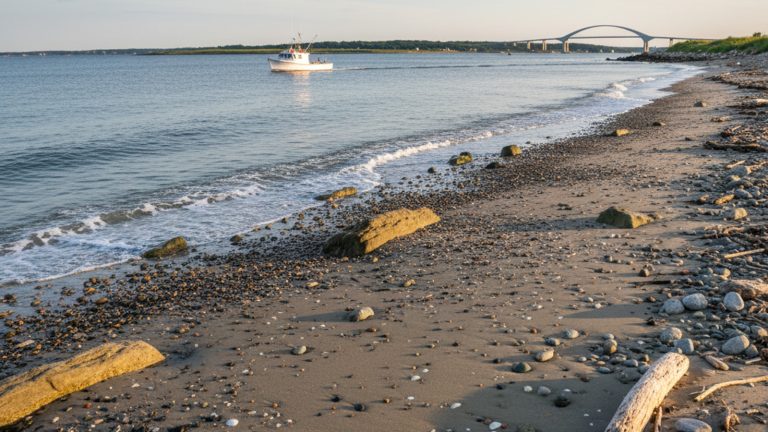
If you are used to the crashing waves of the National Seashore, the beaches in Bourne will feel different—and for many, that’s a plus. Most of Bourne’s coastline faces Buzzards Bay (west-facing), which means the water is significantly warmer and calmer than the Atlantic side.
Beaches like Monument Beach and Gray Gables are fantastic for swimming, kayaking, and paddleboarding without fighting an undertow. These spots are generally resident-focused and avoid the massive tourist crowds found at Mayflower Beach or Coast Guard Beach.
However, if you crave that classic “Cape Cod Bay” experience with dunes and colder water, Scusset Beach State Reservation is located at the east end of the canal (Sagamore side). It offers expansive sand and surf right in town. Boating is also a massive part of the culture here, with extensive marinas and boat ramps offering easy access to both the Canal and the open waters of Buzzards Bay.
Schools and Education
For households moving to the area with children, the education landscape is a major consideration. The Bourne Public Schools system serves students from elementary through high school and is well-regarded in the region.
A unique highlight for the area is the Upper Cape Cod Regional Vocational Technical School (“Upper Cape Tech”). Located right in Bourne, this school is highly competitive and often sees high proficiency rates and graduation stats, drawing students from several surrounding towns.
Another geographic advantage of Bourne is the proximity to private education off-Cape. Because you aren’t trapped behind the bridge traffic, families here have reasonable daily access to prestigious private schools just over the bridge, such as Tabor Academy in Marion. This is an option that is logistically very difficult for families living deeper on the Cape.
Pros and Cons: Choosing Bourne
If you are on the fence about moving to Cape Cod and trying to decide if Bourne is the right landing spot, here is a quick summary of how the tradeoffs usually shake out.
Pros:
- Easiest commute to Boston or Providence of any Cape town.
- Lower tax rate compared to the nearby town of Sandwich.
- Genuine year-round community feel; nothing shuts down in winter.
- Direct access to the Canal Bikeway and warmer Buzzards Bay waters.
Cons:
- “Bridge Traffic” is a reality; even if you aren’t crossing, the roads to the bridges get clogged on summer Fridays.
- Lacks some of the historic “sea captain’s home” charm found along Route 6A.
- Sometimes perceived as having less “prestige” than the Lower Cape estate areas.
The Verdict: Bourne is arguably the best option for commuters and year-rounders who want practical coastal living. It is less ideal for those seeking the remote, wind-swept dunes and heavy surf experience of the Outer Cape.
Frequently Asked Questions
Yes, Bourne is the first town on Cape Cod. However, it is unique because it straddles the Cape Cod Canal, meaning it includes villages on the “mainland” side of the bridges as well as the “Cape” side.
For relocators working in the city, Bourne offers the most manageable commute on the Cape. It is typically a 60 to 75-minute drive, making it a viable option for hybrid workers, whereas commuting from further east can take significantly longer.
Yes, but the experience is different. Bourne’s beaches, like Monument Beach, are primarily on Buzzards Bay, offering warmer, calmer water that is great for swimming, compared to the big waves and cold water of the Atlantic beaches.
Bourne’s property taxes are generally moderate for the region. The rate is typically lower than neighbors like Sandwich or Barnstable, though higher than towns with massive estate values like Chatham, offering good value for the services provided.