

If you are looking to buy a home just over the bridge, you’ve probably narrowed your search down to the two “Gateway” towns: Bourne and Sandwich. While they sit right next to each other along the Cape Cod Canal, the vibe, the commute, and the costs are surprisingly different.
I always tell buyers that the choice between these two often comes down to logistics as much as lifestyle. Which bridge you cross—the Bourne Bridge or the Sagamore Bridge—can dictate your daily routine, your commute time to Boston or Providence, and even how much you pay in taxes every quarter.
Let’s break down the real differences between the maritime practicality of Bourne and the historic charm of Sandwich.
Vibe & Lifestyle: Maritime Hub vs. Historic Quaintness
When you drive through Bourne, you get a sense of a working waterfront town. It feels “lived-in” and practical. It is the home of the Massachusetts Maritime Academy, and because the town wraps around the end of Buzzards Bay, there is a distinct boating and fishing culture here. It has a bit more grit in some areas, but also incredible summer beauty in villages like Cataumet. It doesn’t shut down in the winter as hard as the Lower Cape; it feels like a year-round community.
Sandwich, on the other hand, is the oldest town on the Cape, settled in 1637, and it absolutely looks the part. If you want that “New England postcard” aesthetic—antique colonials, a mill pond, and a white-steepled church—this is it. It is famous for the Sandwich Glass Museum, the Heritage Museums & Gardens, and a downtown area that feels preserved in amber. While it’s also a year-round town, it retains a quieter, village-like atmosphere compared to the commercial hustle you might find on the Bourne strip.
Real Estate & Housing Costs
Both markets are competitive. Inventory for single-family homes in the $600K–$800K range is often tight, as these towns are the first stops for buyers trying to get a foothold on living in Cape Cod.
In Bourne, you will find a diverse mix of housing stock. You have modest cottages in Buzzards Bay that are seeing revitalization, and then you have multi-million dollar luxury waterfront estates in Cataumet and Wings Neck. Generally, entry-level price points in Bourne can be slightly more accessible than the historic estates or large-lot subdivisions in Sandwich.
Sandwich housing is often defined by its character. You’ll see plenty of antique Capes and colonials, but also large 1980s and 90s contemporaries in wooded neighborhoods like Forestdale. You are often paying a premium here for that “historic” cachet and the school district reputation.
The Tax Gap
This is usually the deciding factor for budget-conscious buyers. There is a significant difference in the residential tax rates between the two towns.
- Bourne Tax Rate: Approximately $7.81 per $1,000 of assessed value.
- Sandwich Tax Rate: Approximately $10.57 per $1,000 of assessed value.
Let’s look at what that actually means for your wallet. If you buy a $700,000 home in Sandwich, you are looking at roughly $1,900 more per year in property taxes compared to a similarly priced home in Bourne. Over ten years, that’s nearly $20,000 in savings just by being one town over.
Village Breakdown: Where to Live
One of the most confusing things for newcomers is the village system. Neither town is just one big blob; they are made up of distinct villages, each with its own personality.
Bourne Villages
- Buzzards Bay: This is the downtown area. It’s currently undergoing a revitalization with new parks and dining.
- Sagamore Beach: Located on the mainland side of the canal. This is gold for commuters who want to live “on the Cape” without actually crossing the bridge daily.
- Pocasset & Cataumet: These are classic bayside villages with harbors, marinas, and a strong summer community vibe.
- Gray Gables: A quiet, residential community near the canal entrance, famous for being the summer home of President Grover Cleveland.
Sandwich Villages
- Town Center: The historic core. Walkable to the grist mill, library, and coffee shops.
- East Sandwich: Rural and beautiful. This is where you find the dunes, marsh views, and older farmhouses.
- Forestdale: Located inland and closer to the Mashpee line. This area features many cul-de-sacs and wooded subdivisions, popular for those who want a neighborhood feel.
- South Sandwich: Newer developments and shopping areas, offering convenient access to the highway.
It is worth noting the geography here: Bourne spans both sides of the canal. Sandwich is almost entirely on the Cape side, except for a small slice near Scusset Beach.
The Commute: The Battle of the Bridges
If you work off-Cape, your life will revolve around the bridges.
The Bourne Bridge feeds directly into Route 25 and I-495. If your commute takes you to Providence, New Bedford, or Western MA, Bourne is generally the smarter logistical play.
The Sagamore Bridge feeds into Route 3, which is the direct line to the South Shore and Boston. Sandwich residents usually rely on the Sagamore. The reality of traffic here can be tough; on summer Fridays (incoming) and Sundays (outgoing), the “Sagamore backup” is legendary.
Residents of Bourne who live in Sagamore Beach or Buzzards Bay have a massive advantage: they are already on the mainland side. They can hop on the highway for work without ever crossing a bridge, yet they still have access to the beaches and canal life on weekends.
For public transit, the Cape Flyer train has stops in both Buzzards Bay and Bourne, offering a weekend rail link to Boston. P&B Bus lines also service both towns for daily commuters.
Schools & Education
For many buyers, the school district is a top priority.
Sandwich Public Schools generally carry higher ratings in state rankings. The STEM Academy (grades 7-12) is a significant draw for the district and has a strong reputation. The high school and younger grades are often praised for their academic rigor and extracurriculars.
Bourne Public Schools has a solid reputation with a smaller, tight-knit community feel. Bourne High School serves the district well, and the town has invested in updated facilities.
A unique asset for the region is the Upper Cape Cod Regional Technical School. Located right in Bourne, this vocational-technical school serves both Bourne and Sandwich (along with Wareham, Marion, and Falmouth). It is an excellent option for students seeking trade skills alongside academics. Additionally, if you are looking at private education, Bourne’s location makes the drive to off-Cape schools like Tabor Academy in Marion much more manageable.
Beaches, Recreation, & Amenities
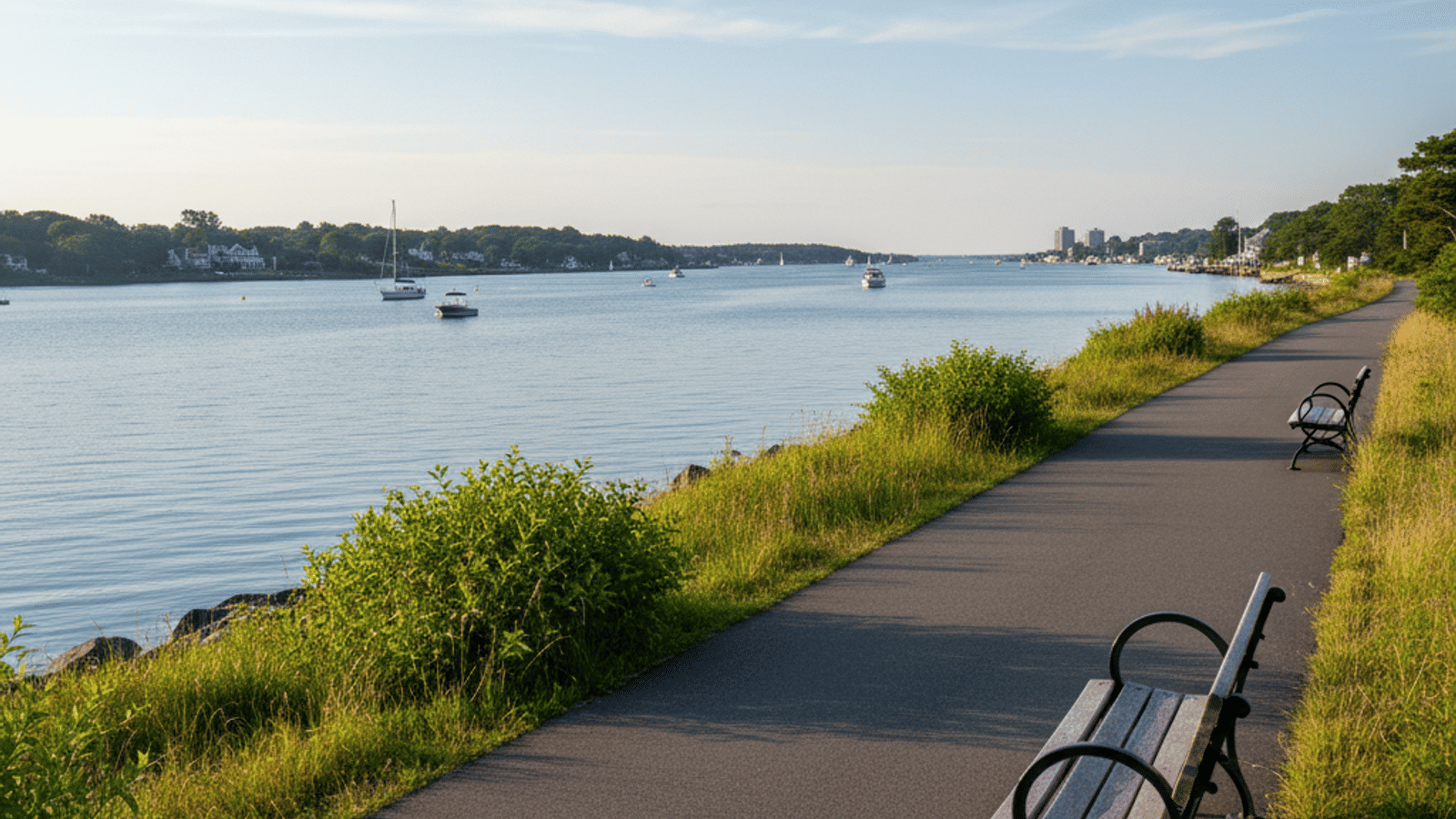
Since both towns border the Cape Cod Canal, residents in both Bourne and Sandwich treat the Canal Bikeway like a shared backyard. It’s perfect for running, cycling, or just watching the ships pass through.
Sandwich Beaches Sandwich is known for dramatic scenery. Town Neck Beach features the iconic boardwalk (currently being rebuilt/restored) and sweeping views, though it is prone to erosion. Sandy Neck Beach is massive, famous for its dunes and off-road vehicle (ORV) access. On the mainland side, Scusset Beach offers a massive fishing pier and camping.
Bourne Beaches Bourne’s beaches are generally tucked into the nooks of Buzzards Bay. Monument Beach and Gray Gables Beach have calmer, warmer waters compared to the ocean side, making them great for swimming and kayaking. You generally don’t get the massive waves here, but you also don’t get the intense erosion issues seen on the Sandwich side.
Dining in Sandwich tends to lean toward quaint tea rooms, historic taverns, and “tourist-friendly” spots. Bourne offers more practical shopping plazas and a growing scene of waterfront dining in Buzzards Bay and Pocasset that caters to the boating crowd.
Pros & Cons Summary
Here is how the two towns stack up at a glance:
Bourne Pros:
- Significantly lower property tax rate ($7.81 vs $10.57).
- Mainland villages (Sagamore Beach/Buzzards Bay) allow for a bridge-free commute.
- Water access on two sides (Buzzards Bay and the Canal).
Bourne Cons:
- Lacks a centralized, walkable “historic downtown” feel; villages are spread out.
- Some commercial areas feel more industrial or dated.
Sandwich Pros:
- Quintessential Cape Cod charm and history; beautiful town center.
- Generally higher-rated public schools.
- Stunning northside beaches with dramatic dunes.
Sandwich Cons:
- Higher cost of living due to taxes.
- The Sagamore Bridge traffic can feel trapping in the summer.
- Historic district rules can be strict for renovations in certain areas.
Verdict: Which Town Fits You?
Ultimately, these two towns offer different versions of the Cape Cod dream.
Choose Bourne if you want to keep your monthly costs down and prioritize an easier commute. It is the practical choice for buyers who want the salt air and the boating lifestyle without the higher tax bill or the worst of the bridge traffic—especially if you look in the mainland villages.
Choose Sandwich if you are chasing that storybook aesthetic and are focused on school rankings. If you don’t mind paying a little more in taxes to live in a town that feels like a preserved village with easy access to Route 3 for a Boston commute, Sandwich is likely the right fit.
FAQ
While home purchase prices in the $600K range can be found in both towns, Bourne is cheaper on a monthly basis due to taxes. Bourne’s residential tax rate is roughly $7.81 per $1,000 compared to Sandwich’s $10.57, which saves homeowners thousands of dollars annually.
It depends on what you like. Sandwich offers dramatic dunes and long stretches of sand like Sandy Neck and Town Neck Beach, which are beautiful but can be rocky or breezy. Bourne features calmer, warmer coves along Buzzards Bay, such as Monument Beach, which are excellent for swimming and boating.
The distance is roughly 55–60 miles, but the Sagamore Bridge is the choke point. While the drive is manageable in the off-season, summer traffic on Fridays and Sundays can add significant time to the trip, whereas Bourne residents on the mainland side can avoid this bottleneck entirely.